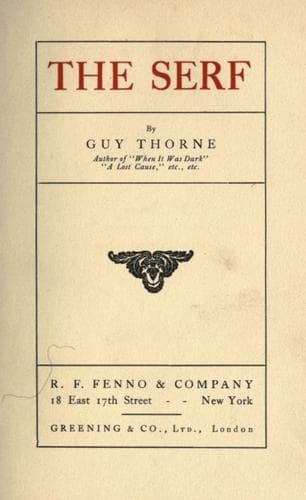
Great Britain -- History -- Stephen, 1135-1154 -- Fiction; Murder -- Fiction; Revenge -- Fiction; Serfs -- Fiction
The Gesith or Thanes, the lesser nobility, had not been unkind to their
slaves, and there was sometimes a draught of "pigment" for them--a sweet
liquor, made of honey, wine, and spice--at times of festival.
Now everything was changed, and among the serfs a passionate spirit of
hatred and revolt was springing up. The less intelligent of them sank
into the condition of mere beasts of burden, without soul or brain. On
the other hand, adversity had sharpened the powers of others, and in
many of them was being born the first glimmerings of a consciousness
that even they had rights.
Hyla himself was one of the most advanced among his brethren. He felt
his manhood and "individuality" more than most of them. "I am I" his
brain sometimes whispered to him. The cruel oppressions to which he was
subject roused him more poignantly day by day.
Some nine months before a peculiarly atrocious deed had consolidated the
nebulous and unexpressed sense of revolt among the serfs of Hilgay into
a regular and definite subject of conversation.
The Forest Laws, which Knut had fenced round with a number of ferocious
edicts, placing the deer and swine far above the serfs themselves, were
made even more vigorous and harsh by the Normans. A theow named Gurth,
who had been seen by a forester picking wood for fires, was suspected of
killing a young boar, which had been found not long after with its belly
ripped open by a sharp stake. Parts of the animal had been cut away,
obviously by a knife, and were missing. Although the serf was absolutely
innocent of the beast's slaughter, which was purely accidental--he had
come upon it dead in the forest, and taken a forequarter to his
home--Geoffroi de la Bourne burnt him in the centre of the village, and
flogged mercilessly all the serfs, women included, who were thought to
have partaken of the dish.
Since that time the men-at-arms and inferior followers of the castle had
taken license to ill-use the serfs in every possible way. The virtue of
no comely girl or married woman was safe, floggings were of daily
occurrence, and, as there were plenty of theows to work, nothing was
said if one or two were occasionally killed or maimed for life in a
drunken brawl.
The serfs in the castle itself had no thoughts but of submission; but
those who lived in the stoke, mingling freely with each other, and with
the poor freedom of their own huts and wives, began to meet night by
night round the central fire to discuss their wrongs.
The Normans never went into the stoke, or at least very rarely. The
theows could not escape, and so that they did the tasks set them, their
proceedings at night mattered not at all.
Hyla sat munching his manchet, and drinking from a horn of sour Welsh
ale, a thin brew staple to the common people. The thought of Frija and
Elgifu was almost more than he could bear.
Public-domain text, read in full here on John Shaqi.
Reviews
Reviews
No reviews yet
Be the first to share your thoughts on this work.
Join the Discussion
Join the discussion
Sign in to leave a comment or review.
Sign InorCreate an account