Married women -- Fiction; Mothers and daughters -- Fiction
The souvenir, took the form of a superb diamond ring, which Cara placed
with ecstasy upon her third finger. The purchase had been speedy--since
Blagdon, a moneyed man, always knew exactly what he wanted--and as they
emerged to the water-side, Cara gazed nervously down the lake. Yes,
the steamer, bearing her mother out of her life, was still in sight.
Her eyes, as she watched it rounding the promontory, were blinded with
tears; when she had brushed these away, she looked once more, but the
_Stadthof_ and her pretty Mum, had disappeared, as far as she was
concerned, for ever.
* * * * *
Having accomplished her errands and visits, Letty arrived punctually at
the Bahnhof Pier, and looked eagerly around for Cara and her parcels;
but no Cara appeared--she was not even in sight as the boat cast off.
Letty and her daughter were dining that evening with Mrs. Hesketh, and
at the Paradis she anxiously awaited her. Cara had missed a boat on
several occasions, and come by the next; and now every time the great
revolving door swung, she expected to see her enter. Time went on,
dinner was over, the nine o’clock steamer had passed by, brilliantly
illuminated.
“What _can_ have become of Cara?” said her mother. “I know she was
going to the Convent--it is not like _them_ to keep the child so late.
Shall we go and wait in the lounge?”
When the ladies entered, the hall, the concierge came forward with a
thin blue telegram, addressed to ‘Mrs. Glyn,’ and handed it to Letty,
who tore it open with shaking fingers. As her eyes glanced over the
contents, she gave a faint exclamation and dropped the paper. Mrs.
Hesketh picked it up instantly, and read:
“Leaving for Paris with father. Good-bye. C. Blagdon.”
CHAPTER XXXIV
The shock of Cara’s desertion prostrated her mother, and for many
days she remained at the Paradis, blanched and shaken, a stricken,
ghost-like guest. Her friend (now completely restored) had taken the
helm of her life in her hands, and was making rapid preparations for
their departure to England.
“My poor dear child,” she said, “I am desperately sorry for you. That
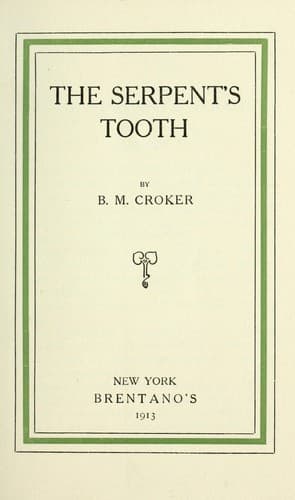
your wound is deep, I know. ‘How sharper than the serpent’s tooth it is
to have a thankless child,’ so said old King Lear; all the same, you
will get over it.”
“No, never, never!” replied Letty with energetic emphasis; and her
voice and face were unrecognisably hard.
“Certainly you will. I speak from experience. When my little boy
died----”
“Your boy!” interrupted Letty, lifting her head; “I never knew you had
a child!”
Public-domain text, read in full here on John Shaqi.
Reviews
Reviews
No reviews yet
Be the first to share your thoughts on this work.
Elsewhere in the archive
Join the Discussion
Join the discussion
Sign in to leave a comment or review.
Sign InorCreate an account