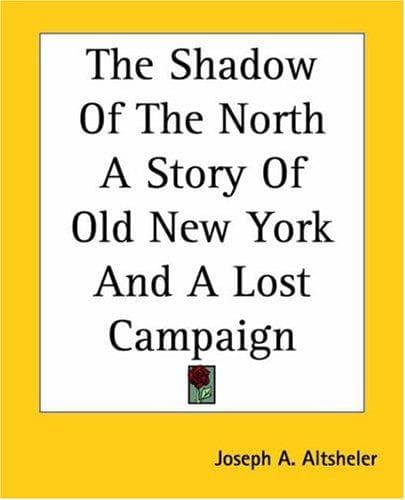
The Shadow of the North: A Story of Old New York and a Lost CampaignAltsheler, Joseph A. (Joseph Alexander)
History
The Shadow of the North: A Story of Old New York and a Lost Campaign
Altsheler, Joseph A. (Joseph Alexander)
United States -- History -- French and Indian War, 1754-1763 -- Juvenile fiction
Robert crept from soldier to soldier, cautioning every one to take
shelter, and to have his rifle ready, and they, being good men, though
without experience, obeyed the one who so obviously knew what he was
doing. Meantime the combat behind them proceeded with vigor, the shots
crashing in volleys, accompanied by shouts, and once by the cry of a
stricken soldier. It was evident that St. Luc was now pushing the
battle, and Robert was quite sure the attack on the flank would soon
come again.
They did not wait much longer. The warriors suddenly leaped from the
undergrowth and rushed straight toward them, a white man now in front.
The light was sufficient for Robert to see that the leader was not
St. Luc, and then without hesitation he raised his rifle and fired.
The man fell, Tayoga stopped the rush of a warrior, and the bullets of
the soldiers wounded others. But their white leader was gone, and
Indians have little love for an attack upon a sheltered enemy. So the
charge broke, before it was half way to the defenders, and the savages
vanished in the thickets.
The soldiers began to exult, but Robert bade them reload as fast as
possible, and keep well under cover. The warriors from new points
would fire at every exposed head, and they could not afford to relax
their caution for an instant.
But it was a difficult task for the youthful veterans of the forest to
keep the older but inexperienced men from the city under cover. They
had an almost overpowering desire to see the Indians who were shooting
at them, and against whom they were sending their bullets. In spite of
every command and entreaty a man would raise his head now and then,
and one, as he did so, received a bullet between the eyes, falling
back quietly, dead before he touched the ground.
"A brave lad has been lost," whispered Tayoga to Robert, "but he has
been an involuntary example to the rest."
The Onondaga spoke in his precise school English, but he knew what he
was saying, as the soldiers now became much more cautious, and
controlled their impulse to raise up for a look, after every shot.
Another man was wounded, but the hurt was not serious and he went on
with his firing. Robert, seeing that the line on the flank could be
held without great difficulty, left Tayoga in command, and crept back
to the main force, where the bullets were coming much faster.
Two of the soldiers in the center had been slain, and three had been
wounded, but Captain Colden had not given ground. He was sitting
behind a rocky outcrop and at the suggestion of Willet was giving
orders to his men. Oppressed at first by the ambush and weight of
responsibility he was exulting now in their ability to check the
savage onset. Robert was quite willing to play a little to his pride
and he said in the formal military manner:
"I wish to report, sir, that all is going well on the southern flank.
One of our men has been killed, but we have made it impossible for the
enemy to advance there."
Public-domain text, read in full here on John Shaqi.
Reviews
Reviews
No reviews yet
Be the first to share your thoughts on this work.
Join the Discussion
Join the discussion
Sign in to leave a comment or review.
Sign InorCreate an account