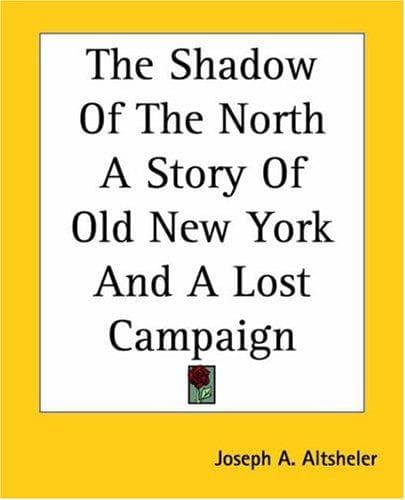
The Shadow of the North: A Story of Old New York and a Lost CampaignAltsheler, Joseph A. (Joseph Alexander)
History
The Shadow of the North: A Story of Old New York and a Lost Campaign
Altsheler, Joseph A. (Joseph Alexander)
United States -- History -- French and Indian War, 1754-1763 -- Juvenile fiction
After a long night of sleep and rest, the little troop resumed its
march the next morning. The wounded fortunately were not hurt so
badly that they could not limp along with the others, and, while the
surgery of the soldiers was rude, it was effective nevertheless.
Daganoweda, as they had expected, prepared to leave them for a raid
toward the St. Lawrence. But he said rather grimly that he might
return, in a month perhaps. He knew where they were going to build
their fort, and unless Corlear and all the other British governors
awoke much earlier in the morning it was more than likely that the
young captain from Philadelphia would need the help of the Mohawks
again.
Then Daganoweda said farewell to Robert, Tayoga, Willet and Black
Rifle, addressing each according to his quality. Them he trusted. He
knew them to be great warriors and daring rovers of the wilderness.
He had no advice for them, because he knew they did not need it, but
he expected them to be his comrades often in the great war, and he
wished them well. To Tayoga he said:
"You and I, oh, young chief of the Onondagas, have hearts that beat
alike. The Onondagas do well to keep aloof from the white man's
quarrels for the present, and to sit at peace, though watchful, in the
vale of Onondaga, but your hopes are with our friends the English and
you in person fight for them. We Mohawks know whom to hate. We know
that the French have robbed us more than any others. We know, that
their Quebec is our Stadacona. So we have dug up the tomahawk and last
night we showed to Sharp Sword and his men and Tandakora the Ojibway
how we could use it."
Sharp Sword was the Iroquois name for St. Luc, who had already proved
his great ability and daring as a forest leader.
"The Ganeagaono are now the chief barrier against the French and their
tribes," said Tayoga.
The brilliant eyes of Daganoweda glittered in his dark face. He knew
that Tayoga would not pay the Mohawks so high a compliment unless he
meant it.
"Tayoga," he said, "we belong to the leading nations of the great
League of the Hodenosaunee, you to the Onundahgaono and I to the
Ganeagaono. You are first in the council and we are first on the
warpath. It was Tododaho, the Onondaga, who first formed the great
League and it was Hayowentha, the Mohawk, who combed the snakes out of
his hair and who strengthened it and who helped him to build it so
firmly that it shall last forever. Brothers are we, and always shall
be."
He touched his forehead in salute, and the Onondaga touched his in
reply.
"Aye, brothers are we," he said, "Mohawk and Onondaga, Onondaga and
Mohawk. The great war of the white kings which draws us in it has
come, but I know that Hayowentha watches over his people, and Tododaho
over his. In the spring when I went forth in the night to fight the
Hurons I gazed off there in the west where shines the great star on
which Tododaho makes his home, and I saw him looking down upon me, and
casting about me the veil of his protection."
Public-domain text, read in full here on John Shaqi.
Reviews
Reviews
No reviews yet
Be the first to share your thoughts on this work.
Join the Discussion
Join the discussion
Sign in to leave a comment or review.
Sign InorCreate an account