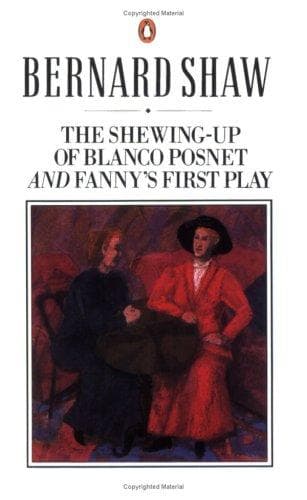
Censorship; Horse stealing -- Drama; West (U.S.) -- Drama
It must not be concluded that the uncompromising abolition of all
censorship involves the abandonment of all control and regulation of
theatres. Factories are regulated in the public interest; but there
is no censorship of factories. For example, many persons are sincerely
convinced that cotton clothing is unhealthy; that alcoholic drinks are
demoralizing; and that playing-cards are the devil's picture-books.
But though the factories in which cotton, whiskey, and cards are
manufactured are stringently regulated under the factory code and the
Public Health and Building Acts, the inspectors appointed to carry out
these Acts never go to a manufacturer and inform him that unless
he manufactures woollens instead of cottons, ginger-beer instead of
whiskey, Bibles instead of playing-cards, he will be forbidden to place
his products on the market. In the case of premises licensed for the
sale of spirits the authorities go a step further. A public-house
differs from a factory in the essential particular that whereas disorder
in a factory is promptly and voluntarily suppressed, because every
moment of its duration involves a measurable pecuniary loss to the
proprietor, disorder in a public-house may be a source of profit to the
proprietor by its attraction for disorderly customers. Consequently a
publican is compelled to obtain a licence to pursue his trade; and this
licence lasts only a year, and need not be renewed if his house has been
conducted in a disorderly manner in the meantime.
PROSTITUTION AND DRINK IN THEATRES
Public-domain text, read in full here on John Shaqi.
Reviews
Reviews
No reviews yet
Be the first to share your thoughts on this work.
Join the Discussion
Join the discussion
Sign in to leave a comment or review.
Sign InorCreate an account