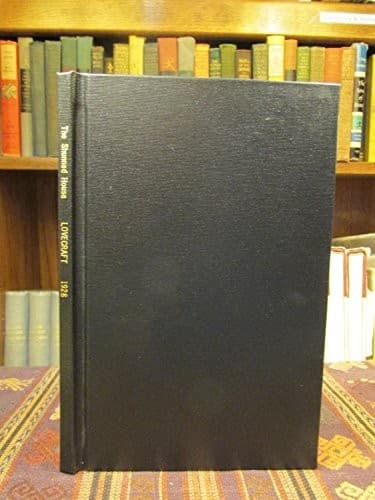
The Shunned HouseLovecraft, H. P. (Howard Phillips)
Science
The Shunned House
Lovecraft, H. P. (Howard Phillips)
Haunted houses -- Fiction; Horror tales, American
Then suddenly I came--by a rare piece of chance, since it was not in the
main body of records and might easily have been missed--upon something
which aroused my keenest eagerness, fitting in as it did with several of
the queerest phases of the affair. It was the record of a lease, in
1697, of a small tract of ground to an Etienne Roulet and wife. At last
the French element had appeared--that, and another deeper element of
horror which the name conjured up from the darkest recesses of my weird
and heterogeneous reading--and I feverishly studied the platting of the
locality as it had been before the cutting through and partial
straightening of Back Street between 1747 and 1758. I found what I had
half expected, that where the shunned house now stood the Roulets had
laid out their graveyard behind a one-story and attic cottage, and that
no record of any transfer of graves existed. The document, indeed, ended
in much confusion; and I was forced to ransack both the Rhode Island
Historical Society and Shepley Library before I could find a local door
which the name of Etienne Roulet would unlock. In the end I did find
something; something of such vague but monstrous import that I set about
at once to examine the cellar of the shunned house itself with a new and
excited minuteness.
The Roulets, it seemed, had come in 1696 from East Greenwich, down the
west shore of Narragansett Bay. They were Huguenots from Caude, and had
encountered much opposition before the Providence selectmen allowed them
to settle in the town. Unpopularity had dogged them in East Greenwich,
whither they had come in 1686, after the revocation of the Edict of
Nantes, and rumor said that the cause of dislike extended beyond mere
racial and national prejudice, or the land disputes which involved other
French settlers with the English in rivalries which not even Governor
Andros could quell. But their ardent Protestantism--too ardent, some
whispered--and their evident distress when virtually driven from the
village down the bay, had moved the sympathy of the town fathers. Here
the strangers had been granted a haven; and the swarthy Etienne Roulet,
less apt at agriculture than at reading queer books and drawing queer
diagrams, was given a clerical post in the warehouse at Pardon
Tillinghast's wharf, far south in Town Street. There had, however, been
a riot of some sort later on--perhaps forty years later, after old
Roulet's death--and no one seemed to hear of the family after that.
Public-domain text, read in full here on John Shaqi.
Reviews
Reviews
No reviews yet
Be the first to share your thoughts on this work.
Join the Discussion
Join the discussion
Sign in to leave a comment or review.
Sign InorCreate an account