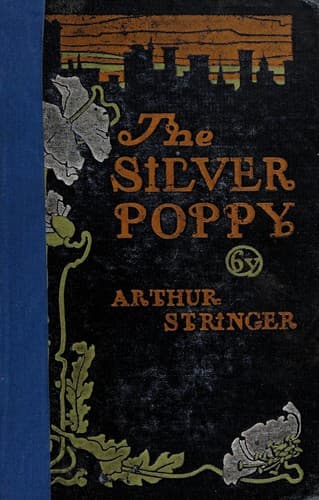
Authors -- Fiction; Canadian fiction; Impostors and imposture -- Fiction; New York (N.Y.) -- Social life and customs -- Fiction
"Yes, I know!" murmured Cordelia, impassively, yet with a quailing
heart, struggling to hide the tremor of dull fear that was shaking her.
She saw that she must act with decision.
"I wonder," she went on, evenly, "if Mr. Hartley explained to you my
intention of occupying these rooms once more--until the lease runs out,
at any rate?"
"He simply sent word that he would come for his things to-morrow, and
that you would take possession of the furniture later."
"Yes, of course! But I should like to put things in order, at once." She
turned to go, but looked back, toying nervously with the keys.
"You say Mr. Hartley comes for his trunks to-morrow?"
"Yes, Miss Vaughan, to-morrow afternoon."
* * * * *
Hartley hesitated before the familiar door, as he slipped his pass-key
into the lock. He knew that it would be for the last time, that once
more the continuity of life was to be rudely snapped. His thoughts went
back to another day, wearily, when he had closed the door on those same
rooms and hurried away careless, hopeful, light-hearted. He thought,
too, as he stood there, with what different feelings, at different
times, he had passed in and out of those same apartments.
Within, he expected everything to be dust and neglect and disorder. To
his surprise there was no sign of this; the very empty quietness of the
rooms seemed still touched with an unknown presence. Everything had been
put carefully to rights, the furniture and rugs were spotless, the
curtains were looped back airily, clusters of freshly cut flowers stood
on his desk and on his mantelpiece.
He looked about him, and sighed heavily, pacing the rooms impatiently
for a bitter minute or two. Then, with an effort, he pulled himself
together, and fell to hurriedly packing his trunks. A sudden new-born
fever to get away from the place swept over him; he had made a grievous
mistake in ever coming back; he was reaping his own reward of corroding
memories. No, no, he told himself, he had no wish to see her again. She
was like the dead to him; she belonged to the ghost-like past. He had no
resentment against her now; he felt no hatred for her. All that he
seemed to feel was a dubious pain, dull and faint and far-away, a pain
for all those days he had blotted out and cut off from his actual
life--as men are said to feel an ache in a limb that has been
amputated.
When he had packed his many-labeled steamer-trunk--brooding absently
over a half-obliterated label bearing the word "Turin," a word that
conjured up strange memories for him--he stowed away the last of what
belongings he cared to take with him in his larger box, inwardly
rejoicing that he was carrying away nothing of hers, or nothing that
should remind him of her, and the life of which she stood the center. He
was forcing down the lid of his trunk when the sharp, metallic click of
a key in the door-lock startled him into sudden uprightness.
Public-domain text, read in full here on John Shaqi.
Reviews
Reviews
No reviews yet
Be the first to share your thoughts on this work.
Elsewhere in the archive
Join the Discussion
Join the discussion
Sign in to leave a comment or review.
Sign InorCreate an account