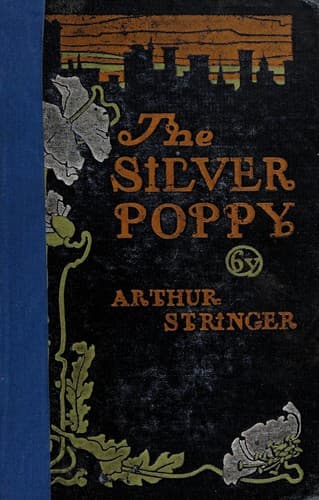
Authors -- Fiction; Canadian fiction; Impostors and imposture -- Fiction; New York (N.Y.) -- Social life and customs -- Fiction
Hartley's first impression of Cordelia Vaughan was a happy confusion of
yellows. Her hair, luxuriant and heavily massed on the small head, was a
sort of tawny gold. Her skin, which more than once had been described as
like old ivory, was in truth neither ivory nor olive, but almost a pale,
rose-like yellow with a transfusing warmth to its pallor, as though the
lights of an open fire were playing upon it. The eyes themselves seemed,
at times, a soft, jade-like yellowish green, muffled, unsatisfied, often
mournful, with a latent hint of tragedy, shading off in strong lights to
a sea gray; by lamplight showing a deep violet. In moments of
excitement or exaltation they were slightly phosphorescent, glowing with
an almost animal-like luminosity that temporarily relieved and illumined
the ascetically cold chiseling of the face itself, suggesting a possible
emotional power that might be stronger at times than the shell which
housed it. Yet they were eyes that looked out on the world with quiet,
brooding melancholy, wistful in repose, with some fugitive sadness--eyes
that suggested, to the young poet at least, some wayward note of autumn,
of twilight, of woodland loneliness. They seemed to betoken the dreamer
in life more than the pioneer and the actor, in periods of weariness
taking on a heavy, languorous, indolent look of half-careless defiance,
like a tired and wilful child's.
At one moment, indeed, Cordelia Vaughan reminded Hartley of an
old-fashioned tea-rose, quaintly anachronistic in her modish
twentieth-century gown; at another moment she brought insistently to his
mind the thought of a piece of fragile chinaware with which the slag of
every-day life had not yet been infused, sadly to convert it into the
ironstone of ordinary mortality.
"I find I am not very strong," she had confessed to him. "My work seems
to take a great deal out of me." And the thought that some great
internal fire was burning away both the youth and beauty of a pale
priestess of Mnemosyne seemed to give to her pallor a new and redeeming
touch of poignancy. For in Cordelia's days of weariness envious women,
lacking her own strange resiliency of vigor, now and then maliciously
declared that on such occasions she "looked her age."
"I am sure I can help you a little," she was saying now, looking up at
Hartley. "But first you must tell me something about yourself and your
work."
He was but four-and-twenty, and accustomed to the coldness and the
reserve of his own older-fashioned countrywomen. So the open warmth and
directness of his companion's manner at first embarrassed him a little.
"That's jolly good of you; but really, you know, I haven't done anything
worth talking about."
"But you've got it in you; I can see you have," said the other, on her
cushion of Princeton orange, looking back unhesitatingly into his
searching eyes. "And then Repellier says so, too," she added
encouragingly.
Public-domain text, read in full here on John Shaqi.
Reviews
Reviews
No reviews yet
Be the first to share your thoughts on this work.
Join the Discussion
Join the discussion
Sign in to leave a comment or review.
Sign InorCreate an account