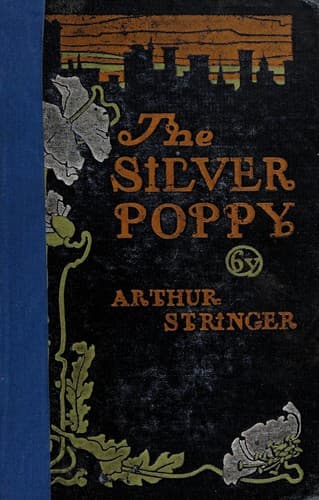
Authors -- Fiction; Canadian fiction; Impostors and imposture -- Fiction; New York (N.Y.) -- Social life and customs -- Fiction
Alfred Spaulding himself had hoped to see grow up about him a family,
but having no children, he drank deep of the anodyne of the dollar; and
so, during the day at least, his loneliness was forgotten. In the
evening, when not too tired, he dressed and went with his wife to the
theater, enjoying it passively, but liking most of all those pieces
"which had lots of music," especially those Broadway performances
characterized as "Gaiety Successes." Sometimes they dined out, and
sometimes he sent Cordelia and his wife off together and ate at home
alone. In his earlier day he had looked toward his wife as the symbol
and embodiment of that softer and, he thought, that higher life which
was necessarily alien to him. Then as her prettiness passed away, and
her limitations came poignantly home to him, he concluded with pious
secrecy that womankind is the upholstery of life, wearing the soonest
where it is the softest.
Cordelia Vaughan, when she became a member of his household, did not
fail to realize the narrow and lonely existence he led. This touched
her keenly in some way, and she did what she could to throw a little
more of the lightness and color of life about his absent-minded coming
and going. He saw and appreciated this generous effort, and if the two
did not become fast friends, they at least grew into more or less good
comrades. Often in the mornings she drove down with him as far as his
office, for Southerner though she was, it was an inexorable rule of her
life to rise early. In some way, though, she was finding her time of
late less and less her own, and their morning drives had become more and
more infrequent.
It was the thought of this, and the sudden pang of regret that came with
it, that took her down to breakfast with Alfred Spaulding not many days
after her first meeting with Hartley. All the way down through the
crowded, narrow cañon of lower Broadway she talked to him with a wistful
attentiveness that left him with his morning papers still contentedly
jammed down in his overcoat pocket.
As she drove home alone in the bright, glimmering little yellow-bodied
Victoria she wondered if it was the soft balminess of the September air
that was stirring in her a new sense of something that she had been
crowding out of her life. It was a morning on which one wished to be
always young.
As the little Victoria swung from Broadway into Fourth Street, she
suddenly caught sight of Hartley, and called for the coachman to pull up
at the curb. Before the young Oxonian had quite realized who it was and
before he had recovered his composure she was stretching a prettily
gloved hand down to him.
"Isn't this lucky?" she cried joyfully.
"It is, indeed," he said, taking her hand and looking into her bright
face, across which a tress or two of her hair had blown. There was
something so airy and light and buoyant about her that she seemed to him
like a bird of passage, alien to the roar and dust about her.
Public-domain text, read in full here on John Shaqi.
Reviews
Reviews
No reviews yet
Be the first to share your thoughts on this work.
Join the Discussion
Join the discussion
Sign in to leave a comment or review.
Sign InorCreate an account