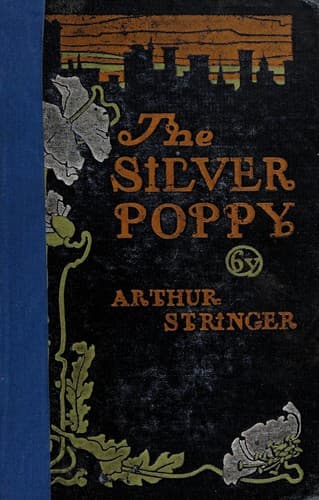
Authors -- Fiction; Canadian fiction; Impostors and imposture -- Fiction; New York (N.Y.) -- Social life and customs -- Fiction
"It's been so hard for me to write things this time," she lamented. "I
feel that it's all going to fall flat. But whatever happens," and her
eyes were eloquent with something more than gratitude, "I've had the
happiest morning of my life."
And she closed the door quietly, and left him there. As he stepped out
into the hard light of noonday, once more he felt that vague impression
of unrest, that reaction of despondency which he had often enough felt
when emerging from the music and romance of a theater and passing out
into the garish lights and noises of a workaday world. He, too, felt
that his day was over and done.
CHAPTER VIII
LIFE'S IRON CROWN
Deep in its ancient center we
Had dreamed its aging heart should be;
Yet there, where should have slept its soul,
Was only darkness and a hollowed bole!
JOHN HARTLEY, "The Old Yew at Iffley."
Society, my dear, is like salt water, good to swim in but hard to
swallow.--"The Silver Poppy."
When Hartley turned the last page of The Silver Poppy he closed the book
meditatively but amazed. In it he had found the golden key to a
long-closed mystery. In it he had seen revealed the great heart and mind
of a misunderstood woman. He had caught the substance where before he
had beheld only the shadow. It was as if from the shuttered windows of
an empty house he had heard unexpected music. He had found the deeper
and truer woman. All suspicion and dread of some elusive element he had
never been able to fathom in Cordelia Vaughan at one stroke vanished
away. Thereafter he was determined to read her and accept her as she lay
revealed in the pages before him.
For he saw that into those pages had escaped some mellower, softer,
profounder part of her, a part which when face to face with her at
different times he had groped for in vain. For he could see, as plain as
his hand, that The Silver Poppy was not a book of the moment. It had in
it elements of greatness that startled him, and left him gasping. There
was a whimsical turn to its tendernesses, a quiet reserve to its humor
and pathos so adroitly blended, a quaintness and ingenuous freshness of
touch, and, above all, an impersonal, judicial aloofness from life that
spoke, at first sight, more of the hand of a man than that of a woman,
and a woman still in her youth--at any rate, in her youth as an artist
and a creator.
Public-domain text, read in full here on John Shaqi.
Reviews
Reviews
No reviews yet
Be the first to share your thoughts on this work.
Join the Discussion
Join the discussion
Sign in to leave a comment or review.
Sign InorCreate an account