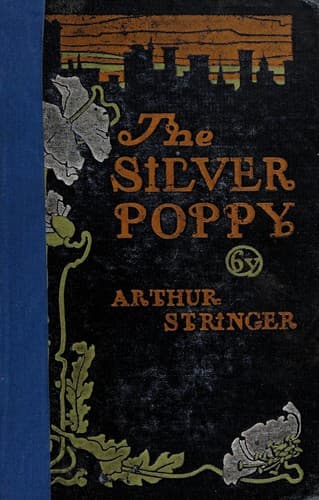
Authors -- Fiction; Canadian fiction; Impostors and imposture -- Fiction; New York (N.Y.) -- Social life and customs -- Fiction
From the first Hartley had been led to regard Cordelia as a woman
without an affluent sense of humor. Then, after reading The Silver
Poppy, he had wondered if she had not drained off, as it were, her
vanished reservoirs of mirth; if her mental blitheness had not been lost
with the too labored advent of her first-born. He had heard not
infrequently of "men of one book." Could it be that Cordelia was a woman
of one supreme effort? Or was it her newer life that was so altering and
wasting and enervating her?
For, hard as he found it to confess to himself, The Unwise Virgins, as a
whole, held neither accomplishment nor hope. In fact, with his child
terror of the trite and the commonplace, and racked as he was by his
"torture of form," he found in it nothing but energy miserably
misspent. It was a heap of glittering particles that ran elusively
through the fingers, a labored thing of shreds and patches. Its
simulation of power was almost pedantry, its affectation of _finesse_
was time and time again flaccid idling with words half understood.
Each time the wings of his admiration were about to unfold, the stroke
of some little banality sent him tumbling down to earth again. Yet
through the maze of all this energy misdirected he could get glimpses of
the substantial enough central idea on which Cordelia had attempted to
build. But on it she had built nothing but a misshapen, chaotic thing
which tempted him, with his passion for form, to demolish and rebuild
after his own fashion. It stood a challenge to him.
Not that Hartley looked on himself as a master workman in this respect.
He could not pride himself on either great experience or great
accomplishment. But the enthusiasm of the true disciple was in him; a
youth of isolation had been building in him those silent fires which
smelt experience and mood into art and expression. He had been a
desultory yet rapacious reader. Through an erratic and none too studious
college course he had fed hungrily on the older literature of his own
tongue, and had also mastered the poets of a tongue which he could never
force himself to look on as dead. He had come out of these excursions
with a sensitized taste and the gift of a sort of literary bletonism,
intuitively responding to any sign of the artist beyond the effort. And
now, with the touch refined and the hand trained, he, as an artist,
stood idle, pounding the anvil of journalism when he might be wielding
the chisel of the gold-smith.
Public-domain text, read in full here on John Shaqi.
Reviews
Reviews
No reviews yet
Be the first to share your thoughts on this work.
Join the Discussion
Join the discussion
Sign in to leave a comment or review.
Sign InorCreate an account