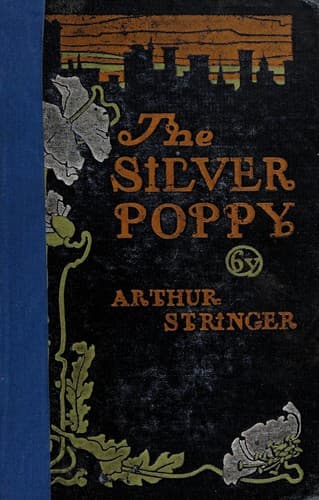
Authors -- Fiction; Canadian fiction; Impostors and imposture -- Fiction; New York (N.Y.) -- Social life and customs -- Fiction
In dusty little pens about the august editorial chair toiled some ten or
twelve sadly dilapidated literary hacks, waifs of the sea of journalism
that had been washed up on the inhospitable shores of the syndicate
bureau. They were, as a rule, old men eking out a simple existence on
their few dollars a week, and, after frugal repasts at the noonday hour,
when the wheels of creative imagination suspended for luncheon, dilating
pensively on the old days, the good old palmy days of Greeley and Dana
and Godkin, when to wield the pen was a labor of love and honor, when a
newspaper man was not a walking sweat-shop of letters, whereby
literature was turned out in job lots and articles were manufactured at
so much the dozen.
It had not taken Hartley long to find that the United News Bureau was
looked on with considerable contempt, with even hatred, by the ordinary
New York newspaper writer. These upholders of sometimes dubiously
conventional journalism made it a rule always to refer to the bureau as
"the Boiler-Plate Factory," and night and day they watched it with
suspicious eyes for evidences of violated copyright. But the bureau knew
its business, and the different members of its staff had long since been
schooled in the deft execution of what was not inappropriately termed a
"plate sneak." This form of literary gymnastics consisted in the bodily
appropriation of any desired article, sermon, story, or essay, the copy
purloined being neatly disguised by a false face, as it were, in the
substitution of a freshly written introduction. An original paragraph or
two was attached to the end, with, perhaps, the interpolation of an
occasional new sentence throughout the body of the thing purloined. As
the bureau dealt in everything from anniversary poetry to syndicated
political addresses, the field for its predatory activities was
practically unlimited. A short story could be made by transplanting a De
Maupassant peasant to a New England farm, or the interjection of a
Kipling recruit into an Arizona mining-camp. The old-time action was
jealously preserved in the transformation, the only alterations being
those essential to a change of climate and conditions--and, presto, one
had a new tale as bright and glittering as a freshly minted penny.
Public-domain text, read in full here on John Shaqi.
Reviews
Reviews
No reviews yet
Be the first to share your thoughts on this work.
Join the Discussion
Join the discussion
Sign in to leave a comment or review.
Sign InorCreate an account