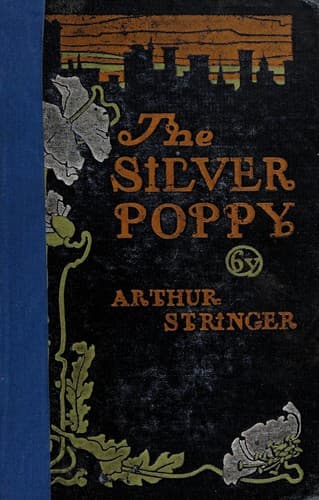
Authors -- Fiction; Canadian fiction; Impostors and imposture -- Fiction; New York (N.Y.) -- Social life and customs -- Fiction
"It's too late; I can't. And that's the worst of it all. You see that
bent, tired-looking old man sitting by the woman in gray? Well, he's the
editor of 'The Republic.' For twenty years now he's been talking about
the little peach-farm he's going to buy somewhere back in the New Jersey
hills. He's never done it, poor old fellow! And he'll never do it.
That's only his _fata morgana_, for he's foredoomed to die in harness.
He couldn't break away from this life if he wanted to; he'd get homesick
for the glare and noise and rush and rattle of it in a week, and perish
of loneliness. But still he goes grinding away, dreaming about his
peach-farm among the hills, and putting it continually off for one year
more, and then still one year more. But there--you're beginning to think
I'm a regular Jeremiah wailing in the desert of American mediocrity, so
I'm going to leave you here alone to think it all over."
From the shadowy quietness of his window-seat Hartley looked out on the
shifting, bewildering scene before him, a panorama of movement and color
and energy that seemed to lose none of its unrest as midnight approached
and waned. The young Oxonian felt that it was all a more or less
disturbing glimpse of a new world that was opening up before him. He
seemed able to catch at no order or meaning in the trend of it. At his
Old World university, and in London itself, he had come more or less in
touch with many of the great men of his age. About these Old World men
there had always seemed to be an atmosphere--an almost repellent
atmosphere--of academic calm, of intellectual reserve. When need be,
they seemed able to surround themselves with a cuttlefish cloud of
austerity. At that late day, a little to his distress, he was learning
that eminence was not always august, that now and then even a lion could
gambol. He wondered, in his perplexity, if it was some unexpected and
belated blossoming of American humor, of that American humor which still
so puzzled him. He did not condemn what seemed the eternal facetiousness
of the American--he was still too avid of impression and too open-minded
for that--but it disquieted him, and made him feel ill at ease.
Public-domain text, read in full here on John Shaqi.
Reviews
Reviews
No reviews yet
Be the first to share your thoughts on this work.
Join the Discussion
Join the discussion
Sign in to leave a comment or review.
Sign InorCreate an account