Authors -- Fiction; Canadian fiction; Impostors and imposture -- Fiction; New York (N.Y.) -- Social life and customs -- Fiction
While this humor of unrest still hung over him he took down his brightly
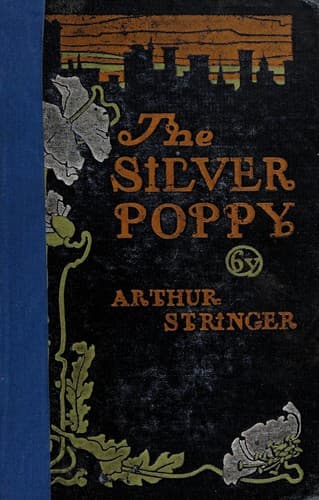
bound copy of The Silver Poppy and read it through studiously, from
first to last. The sense of its exceptional power came to him once more,
as a revelation reiterated. He found it a book where the gleaner caught
at much which the more hurried harvester must miss, a book yielding, as
he felt all good books should yield, a new and unexpected delight in its
second reading. Outside the manifest strength and movement of the story
there was the secondary charm of a quiet and masterly touch. Its satire
was delightful and insidious, and through its merriest pages he found
the Touchstone-like pensiveness of one who knew and understood a sad old
wag of a world. He found in it, too--and this puzzled him most--still
that sense of eternally saving humor of which he had seen so little in
Cordelia herself. From page to page it flashed out at him, it tripped
him up, and danced about him. He began to understand the better why The
Silver Poppy had been called one of the novels of the year, even of the
century. He thought he saw now just what Cordelia had meant when she had
timorously asked him if he thought it possible that she had written
herself out in one book. That early, crocus-like flowering of the spirit
was no less beautiful because it was already over and gone with the
April of life.
Where in that little body had such wisdom and power once been packed
away? She had always seemed such a fragile, shell-tinted thing to him,
the wonder was that she had written a book at all, that in one eloquent
interval she had found a voice, and delivered her message. But was that
one work alone to stand the key to that strangely reticent soul of hers?
Had she, as with those little East Side fruit-shops he knew so well,
ranged all her stock in trade out on the public sidewalk, and left empty
the store itself?
The thought of a bewildered but aspiring artist, caged in a body so
incongruously frail and girlish, filled him with a pity for the
sorrowing laborer struck helpless in the midst of her work--for the
writing hand fallen helpless in the midst of its dreams. He suddenly
felt that he should be willing to go through fire and water to bring one
laurel leaf to that small, proudly poised head with its profusion of
yellowish golden hair. And with this mood the grayness seemed to go out
of the world. And still again he asked himself if this could be love.
Public-domain text, read in full here on John Shaqi.
Reviews
Reviews
No reviews yet
Be the first to share your thoughts on this work.
Elsewhere in the archive
Join the Discussion
Join the discussion
Sign in to leave a comment or review.
Sign InorCreate an account