Authors -- Fiction; Canadian fiction; Impostors and imposture -- Fiction; New York (N.Y.) -- Social life and customs -- Fiction
"With a snub-nosed Helen, my boy," Repellier had once said, "there would
never have been a Trojan war." Hartley, valiant with the wine of his new
resolve, straightway began to wonder how or why he had so recently posed
as a second Schopenhauer to this same Repellier, and cried in disgust
that everything had already been sufficiently cursed or sufficiently
sung. His passion for work came back to him with a bound. The Cyrus of
unrest that had diverted his better thoughts from their natural channel
seemed to have marched on and left the Euphrates of his heart in full
flood once more. He knew that his vague mental acrisia had at last come
to a turn, and was to be followed by its violent fever to create, to
build.
In one illuminating moment he saw that the modern life about which it
was now his task to write was no less strenuous and no less varied than
the life of those earlier days toward which he had fallen into the habit
of looking back so regretfully. But it was in the inner rather than in
the outer life, he felt, that the greater intensity and interest were
now to be found. It was the mental career of men and women that was
becoming more complex and more varied; and it was in this, he saw, that
the broader and more enduring field of the novelist lay. At times,
indeed, the alluring complexity and bewildering activity of this inner
subjective world spread before him like an endless valley of untrodden
twilight, shot through with some emotional golden glory of
retrospection. And he longed for some fuller power to pierce into it,
and grasp it, and interpret it.
With this elemental touch of rapture still clinging about him he went
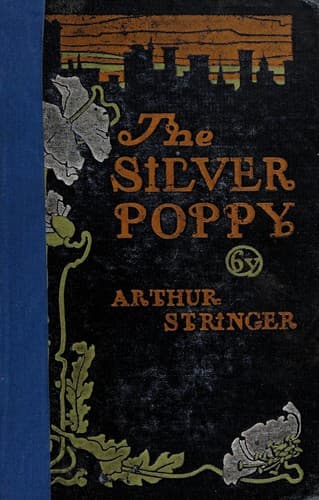
back to his manuscript of The Unwise Virgins. The spell of The Silver
Poppy too seemed, in some way, still pregnantly close to him, and
through some little trick of the hand or mind he found himself from time
to time dropping into the touch of that earlier effort.
He began at the first and rewrote the entire book. Whipping his earlier
erratic chapters into line, he quirted and corralled the herd of them
into one unified, crowded whole. He went at his manuscript with a trace,
almost, of the madman in him as he worked. Sometimes he ate, and
sometimes he forgot to, or refused to spare time for it. He worked late
into the night; sometimes all night long. He worked as he had seen
Oxfordshire farmers working at raising bees, under stress and the cry of
excitement, lifting and heaving beyond his natural strength, with an
ardor that was to leave him stiff and sore, yet with the balm of knowing
that one hour of exhilaration, to the artist, was worth its day of
depression.
When his brain balked he lashed it on with strong coffee and stimulants,
living, most of the time, on tobacco and innumerable milk-punches. He
saw no one, and he wanted to see no one. It lasted two, almost three
weeks; he was not sure, for toward the end he lost count of the days.
Public-domain text, read in full here on John Shaqi.
Reviews
Reviews
No reviews yet
Be the first to share your thoughts on this work.
Elsewhere in the archive
Join the Discussion
Join the discussion
Sign in to leave a comment or review.
Sign InorCreate an account