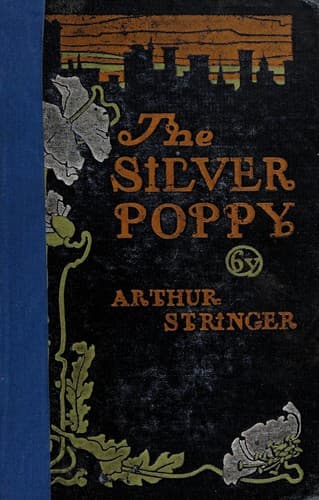
Authors -- Fiction; Canadian fiction; Impostors and imposture -- Fiction; New York (N.Y.) -- Social life and customs -- Fiction
"Yes, I think I have. It's all very fine out there, but it doesn't pay
for the wear and tear on the hawsers. And then there's one's bread and
butter; and in New York they can give you so many nice jams to go with
it."
"I knew it, I knew it! I never saw a boy come to this city yet who
didn't have the rose-tint taken out of his dreams about the same time
the rose-tint was taken out of his cheeks. I _said_ your accent wouldn't
be as broad when you'd finished with us--nor your views, either."
"No man can live by verse alone."
"It's not that; it's what the verse and all that stands for. You know
what The Silver Poppy says, 'A song in the heart is worth two in the
book.'"
She looked up at him with almost a kindly light on her rough, mannish
face as she said good-by.
"My poet, don't, don't let them break you on the golden wheel of their
happiness!"
Hartley did not enjoy his cup of Golden Tip that afternoon with Cordelia
and two voluminously over-dressed young ladies whom she spoke of as "the
Slater girls." Their chatter irritated him, and for once there seemed
something sickly, unnatural, exotic, about the overheated air of an
overfurnished hotel which existed, as he remembered a compatriot of his
had exclaimed, "to provide exclusiveness for the masses."
He knew that it, and all it held, stood for those very conditions of
life against which he had once rebelled so vigorously. With its glitter
and gliding, did it, he asked himself bitterly--after all, did it
represent the fulness of life?
"Why are you so quiet to-day?" Cordelia asked him, reprovingly, under
her breath. He had noticed of late a certain outward hardening about her
at times--she seemed to him like a judge steeling herself for some
impending sentence that must be passed.
"It's the ghost of a dead radical rising up against gold-leaf and cut
glass," he laughed.
"Oh, yes, you used to be an anarchist, or something like that, didn't
you?" she said wearily.
"Not _quite_ that."
"I wanted you to be nice to these two girls. I thought I told you they
were my publisher's daughters?"
She noticed his half-sinister smile.
"Some day," she said almost angrily, "you'll learn that nothing succeeds
like success, my moody young Hamlet." And for the rest of the afternoon
she avoided him.
He was not sorry when a chance came for his escape. The very stale, dull
flatness of the trite and contemptible spiritual drama in which he was
playing an involuntary leading part depressed and sickened him of it
all. It brought with it not even the consolation of largeness--it was
all flaccid, neutral, outwardly insignificant. But he felt that unseen
hands were building a wall between him and his freedom, even while, at
the core of things, some miserably minute germ seemed tainting his life.
And if he could not still have health and liberty, he would at least
have elbow-room. The startled question of Miss Short still rang in his
ears: "My poet, my poet, what have they been doing to you?"
Public-domain text, read in full here on John Shaqi.
Reviews
Reviews
No reviews yet
Be the first to share your thoughts on this work.
Elsewhere in the archive
Join the Discussion
Join the discussion
Sign in to leave a comment or review.
Sign InorCreate an account