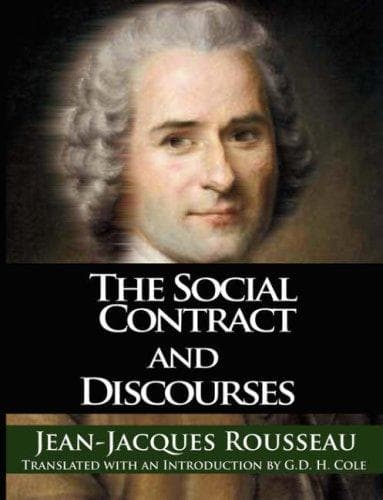
The social contract & discoursesRousseau, Jean-Jacques
Philosophy
The social contract & discourses
Rousseau, Jean-Jacques
Economics; Political science -- Early works to 1800; Social contract
[1] On the same principle it should be judged what centuries deserve
the preference for human prosperity. Those in which letters and arts
have flourished have been too much admired, because the hidden object
of their culture has not been fathomed, and their fatal effects not
taken into account. "Idque apud imperitos humanitas vocabatur, cum
pars servitutis esset." ["Fools called 'humanity' what was a part of
slavery," Tacitus, _Agricola_, 31.] Shall we never see in the maxims
books lay down the vulgar interest that makes their writers speak?
No, whatever they may say, when, despite its renown, a country is
depopulated, it is not true that all is well, and it is not enough that
a poet should have an income of 100,000 francs to make his age the
best of all. Less attention should be paid to the apparent repose and
tranquillity of the rulers than to the well-being of their nations as
wholes, and above all of the most numerous States. A hail-storm lays
several cantons waste, but it rarely makes a famine. Outbreaks and
civil wars give rulers rude shocks, but they are not the real ills of
peoples, who may even get a respite, while there is a dispute as to who
shall tyrannise over them. Their true prosperity and calamities come
from their permanent condition: it is when the whole remains crushed
beneath the yoke, that decay sets in, and that the rulers destroy
them at will, and "ubi solitudinem faciunt, pacem appellant" ["Where
they create solitude, they call it peace," Tacitus, _Agricola_, 31.]
When the bickerings of the great disturbed the kingdom of France, and
the Coadjutor of Paris took a dagger in his pocket to the Parliament,
these things did not prevent the people of France from prospering and
multiplying in dignity, ease and freedom. Long ago Greece flourished
in the midst of the most savage wars; blood ran in torrents, and yet
the whole country was covered with inhabitants. It appeared, says
Macchiavelli, that in the midst of murder, proscription and civil war,
our republic only throve: the virtue, morality and independence of the
citizens did more to strengthen it than all their dissensions had done
to enfeeble it A little disturbance gives the soul elasticity; what
makes the race truly prosperous is not so much peace as liberty.
CHAPTER X
THE ABUSE OF GOVERNMENT AND ITS TENDENCY TO DEGENERATE
As the particular will acts constantly in opposition to the general
will, the government continually exerts itself against the Sovereignty.
The greater this exertion becomes, the more the constitution changes;
and, as there is in this case no other corporate will to create an
equilibrium by resisting the will of the prince, sooner or later the
prince must inevitably suppress the Sovereign and break the social
treaty. This is the unavoidable and inherent defect which, from the
very birth of the body politic, tends ceaselessly to destroy it, as age
and death end by destroying the human body.
Public-domain text, read in full here on John Shaqi.
Reviews
Reviews
No reviews yet
Be the first to share your thoughts on this work.
Elsewhere in the archive
Join the Discussion
Join the discussion
Sign in to leave a comment or review.
Sign InorCreate an account