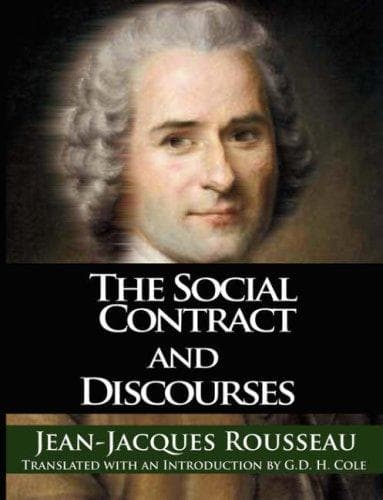
The social contract & discoursesRousseau, Jean-Jacques
Philosophy
The social contract & discourses
Rousseau, Jean-Jacques
Economics; Political science -- Early works to 1800; Social contract
[3] I dare not speak of those happy nations, who did not even know the
name of many vices, which we find it difficult to suppress; the savages
of America, whose simple and natural mode of government Montaigne
preferred, without hesitation, not only to the laws of Plato, but to
the most perfect visions of government philosophy can ever suggest He
cites many examples, striking for those who are capable of appreciating
them. But, what of all that, says he, they can't run to a pair of
breeches!
[4] What are we to think was the real opinion of the Athenians
themselves about eloquence, when they were so very careful to banish
declamation from that upright tribunal, against whose decision even
their gods made no appeal? What did the Romans think of physicians,
when they expelled medicine from the republic? And when the relics of
humanity left among the Spaniards induced them to forbid their lawyers
to set foot in America, what must they have thought of jurisprudence?
May it not be said that they thought, by this single expedient, to make
reparation for all the outrages they had committed against the unhappy
Indians?
THE SECOND PART
An ancient tradition passed out of Egypt into Greece, that some god,
who was an enemy to the repose of mankind, was the inventor of the
sciences.[1] What must the Egyptians, among whom the sciences first
arose, have thought of them? And they beheld, near at hand, the sources
from which they sprang. In fact, whether we turn to the annals of the
world, or eke out with philosophical investigations the uncertain
chronicles of history, we shall not find for human knowledge an origin
answering to the idea we are pleased to entertain of it at present.
Astronomy was born of superstition, eloquence of ambition, hatred,
falsehood and flattery; geometry of avarice; physics of an idle
curiosity; and even moral philosophy of human pride. Thus the arts and
sciences owe their birth to our vices; we should be less doubtful of
their advantages, if they had sprung from our virtues.
Their evil origin is, indeed, but too plainly reproduced in their
objects. What would become of the arts, were they not cherished by
luxury? If men were not unjust, of what use were jurisprudence?
What would become of history, if there were no tyrants, wars,
or conspiracies? In a word, who would pass his life in barren
speculations, if everybody, attentive only to the obligations of
humanity and the necessities of nature, spent his whole life in serving
his country, obliging his friends, and relieving the unhappy? Are we
then made to live and die on the brink of that well at the bottom of
which Truth lies hid? This reflection alone is, in my opinion, enough
to discourage at first setting out every man who seriously endeavours
to instruct himself by the study of philosophy.
Public-domain text, read in full here on John Shaqi.
Reviews
Reviews
No reviews yet
Be the first to share your thoughts on this work.
Elsewhere in the archive
Join the Discussion
Join the discussion
Sign in to leave a comment or review.
Sign InorCreate an account