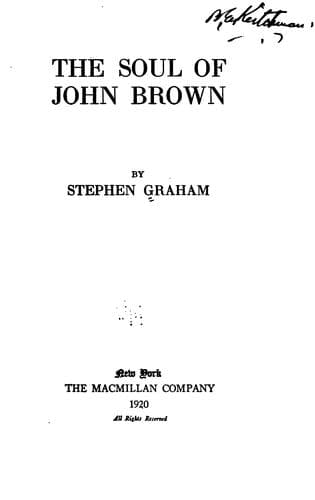
African Americans; United States -- Race relations
All night the river whispered its name and lulled the boat to sleep.
Dawn on the broad serenity of the waters at Old Point Comfort was
utterly unlike the North, from which I had come, and the last ten days
of jangling trolley cars hustling along shoppy streets. A morning star
shone in the pale-blue sky, lighting as it were a vestal lamp over
the coast, and we looked upon Virginia. As the sun rose, vapor closed
in the scene. We made the port of Norfolk in a mist which seemed each
moment getting warmer. The chill winds of October were due in the
North, but Virginia was immune. During the week I spent in the city of
Norfolk and on Hampton Roads it did not get less than 85 in the shade,
even at night. The weather, however, was hotter than is usual even in
Eastern Virginia at that time of the year.
I obtained the impression of a great city rather cramped for want of
space, and in this I suppose I was right. By all accounts Norfolk has
trebled its population during the war, and needs to have its center
rebuilt spaciously and worthily. When Olmsted came through in 1853 he
records that Norfolk was a dirty, low, ill-arranged town, having no
lyceum or public library, no gardens, no art galleries, and though
possessing two “Bethels” having no “Seamen’s Home” and no place of
healthy amusement. He rather makes fun of a Lieutenant Maury, who in
those days was having a vision of the Norfolk of the future, and saw
it one of the greatest ports in the world, being midmost point of the
Atlantic coast and having an inner and an outer harbor with perfect
facilities of ingress and egress in all weathers.
To-day Lieutenant Maury’s vision has proved prophetic. In the maps of
the new America which is coming, Norfolk is destined to be printed
in ever larger letters. The war showed the way. The determination of
America to be worthily armed at sea made it certain, and the future
of Norfolk, with Hampton Roads and Newport News, is to be the primary
naval base of the Atlantic coast. The military and naval activities
of Norfolk during the war were very important. Eastern Virginia was
a great training ground, and Norfolk the main port of embarkation of
troops for Europe. Shipbuilding and naval construction also were in
full swing. Great numbers of laborers, especially Negroes, seem to have
been attracted. The number no doubt is exaggerated, but the colored
people there number themselves now at one hundred thousand. They
have been attracted by the high wages and the record of Norfolk for
immunity from mob violence. A lynching is not in anyone’s remembrance.
Trouble might have broken out during the war, but Norfolk possessed an
excellent “City Manager” who was always prepared.
Public-domain text, read in full here on John Shaqi.
Reviews
Reviews
No reviews yet
Be the first to share your thoughts on this work.
Join the Discussion
Join the discussion
Sign in to leave a comment or review.
Sign InorCreate an account