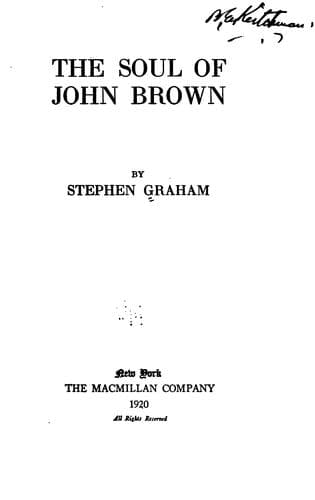
African Americans; United States -- Race relations
There are many features of life on the modern plantation, be it of
sugar or cotton, which suggest slavery. Virtual slavery is called
_peonage_ and many examples were given me by Negroes. It is arranged
in some places that the Negro handles as little money as possible.
Instead of money he has credit checks, metal or cardboard disks,
which he can use at the general store to purchase his provisions.
He is kept in debt so that he can never get out, and so lives with
a halter round his neck. Especially during the war, when the rumor
of war wages was tempting the colored labor of the South to migrate
North in huge numbers, efforts were made to keep the Negro without
the means of straying from the locality where the labor of his hands
was the foundation of the life of the community. Other forms of
_peonage_ prevalent in rural parts is the commuting of punishment for
forced labor, the hiring out of penal labor to companies or public
authorities. This resembles the use made of prisoners during the recent
world war, and is virtual slavery.
All inroads made on the liberty of the subject might fittingly
be classed as _peonage_—the denial of the vote to those legally
enfranchised, intimidation by lynch law, etc.
I talked with an old Negro after leaving Louisville and tramping south
toward Midville. He was lolling in rags on his porch—very near white.
His father had been his black mother’s white master. He remembered
Sherman’s passing when he was a boy. A remarkably intelligent and
tragic face, where an unhappy white man looked out on the misery of
abject poverty and quasi-bondage. Cotton had proved bad this year. The
boll weevil had entered the pod early. There were but three or four
bales to the plow. He did not know how he’d foot his bills. The rations
given him in the spring had become exhausted. He had also hoped to buy
clothes. He said the traders came early in the year and supplied him
with all sorts of things on the strength of a large cotton crop, and
he pointed to a toy bicycle lying upside down in the grass. He let his
little boy stride it, and mother thought it fine. Last year God had
blessed them with a very fine crop, and why should He not be as kind
this year? So he signed on for the toy bicycle and for a gramophone as
well. Now he complained that they were cutting off his rations, mother
lay ill a-bed, the weather was getting cold, and they had no clothes.
The boss was coming presently to turn them out of the cabin altogether,
and they did not know where to go. Even while we were talking two
bullet-headed young fellows, clean-shaven, frank, and surly, came up
in an automobile, stopped short, and rated the old man from where they
sat in the car. The cabin and the little cotton plantation belonged to
them now, and the old fellow was reverting from small proprietor to be
laborer on a plantation, and to be laborer was little better than to be
slave.
Public-domain text, read in full here on John Shaqi.
Reviews
Reviews
No reviews yet
Be the first to share your thoughts on this work.
Elsewhere in the archive
Join the Discussion
Join the discussion
Sign in to leave a comment or review.
Sign InorCreate an account