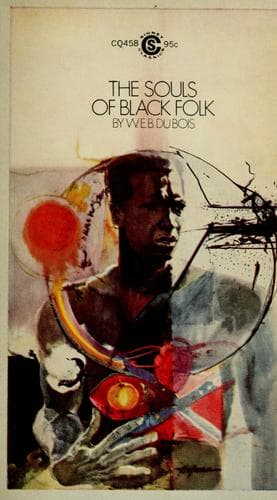
The Souls of Black FolkDu Bois, W. E. B. (William Edward Burghardt)
History
The Souls of Black Folk
Du Bois, W. E. B. (William Edward Burghardt)
African Americans
This unfortunate economic situation does not mean the hindrance of all
advance in the black South, or the absence of a class of black
landlords and mechanics who, in spite of disadvantages, are
accumulating property and making good citizens. But it does mean that
this class is not nearly so large as a fairer economic system might
easily make it, that those who survive in the competition are
handicapped so as to accomplish much less than they deserve to, and
that, above all, the _personnel_ of the successful class is left to
chance and accident, and not to any intelligent culling or reasonable
methods of selection. As a remedy for this, there is but one possible
procedure. We must accept some of the race prejudice in the South as a
fact,—deplorable in its intensity, unfortunate in results, and
dangerous for the future, but nevertheless a hard fact which only time
can efface. We cannot hope, then, in this generation, or for several
generations, that the mass of the whites can be brought to assume that
close sympathetic and self-sacrificing leadership of the blacks which
their present situation so eloquently demands. Such leadership, such
social teaching and example, must come from the blacks themselves. For
some time men doubted as to whether the Negro could develop such
leaders; but to-day no one seriously disputes the capability of
individual Negroes to assimilate the culture and common sense of modern
civilization, and to pass it on, to some extent at least, to their
fellows. If this is true, then here is the path out of the economic
situation, and here is the imperative demand for trained Negro leaders
of character and intelligence,—men of skill, men of light and leading,
college-bred men, black captains of industry, and missionaries of
culture; men who thoroughly comprehend and know modern civilization,
and can take hold of Negro communities and raise and train them by
force of precept and example, deep sympathy, and the inspiration of
common blood and ideals. But if such men are to be effective they must
have some power,—they must be backed by the best public opinion of
these communities, and able to wield for their objects and aims such
weapons as the experience of the world has taught are indispensable to
human progress.
Of such weapons the greatest, perhaps, in the modern world is the power
of the ballot; and this brings me to a consideration of the third form
of contact between whites and blacks in the South,—political activity.
Public-domain text, read in full here on John Shaqi.
Reviews
Reviews
No reviews yet
Be the first to share your thoughts on this work.
Elsewhere in the archive
Join the Discussion
Join the discussion
Sign in to leave a comment or review.
Sign InorCreate an account