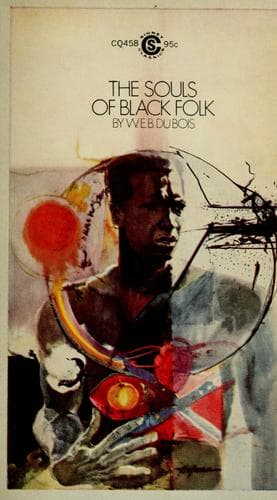
The Souls of Black FolkDu Bois, W. E. B. (William Edward Burghardt)
History
The Souls of Black Folk
Du Bois, W. E. B. (William Edward Burghardt)
African Americans
Now, is this a minor matter which has no influence on the main question
of the industrial and intellectual development of the Negro? Can we
establish a mass of black laborers and artisans and landholders in the
South who, by law and public opinion, have absolutely no voice in
shaping the laws under which they live and work? Can the modern
organization of industry, assuming as it does free democratic
government and the power and ability of the laboring classes to compel
respect for their welfare,—can this system be carried out in the South
when half its laboring force is voiceless in the public councils and
powerless in its own defence? To-day the black man of the South has
almost nothing to say as to how much he shall be taxed, or how those
taxes shall be expended; as to who shall execute the laws, and how they
shall do it; as to who shall make the laws, and how they shall be made.
It is pitiable that frantic efforts must be made at critical times to
get law-makers in some States even to listen to the respectful
presentation of the black man’s side of a current controversy. Daily
the Negro is coming more and more to look upon law and justice, not as
protecting safeguards, but as sources of humiliation and oppression.
The laws are made by men who have little interest in him; they are
executed by men who have absolutely no motive for treating the black
people with courtesy or consideration; and, finally, the accused
law-breaker is tried, not by his peers, but too often by men who would
rather punish ten innocent Negroes than let one guilty one escape.
Public-domain text, read in full here on John Shaqi.
Reviews
Reviews
No reviews yet
Be the first to share your thoughts on this work.
Elsewhere in the archive
Join the Discussion
Join the discussion
Sign in to leave a comment or review.
Sign InorCreate an account