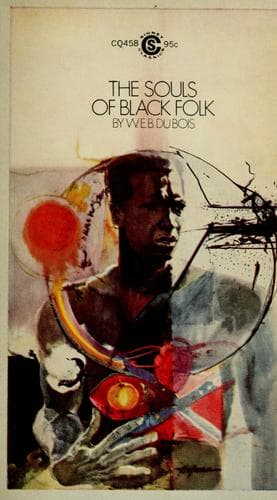
The Souls of Black FolkDu Bois, W. E. B. (William Edward Burghardt)
History
The Souls of Black Folk
Du Bois, W. E. B. (William Edward Burghardt)
African Americans
Here again the hope for the future depended peculiarly on careful and
delicate dealing with these criminals. Their offences at first were
those of laziness, carelessness, and impulse, rather than of malignity
or ungoverned viciousness. Such misdemeanors needed discriminating
treatment, firm but reformatory, with no hint of injustice, and full
proof of guilt. For such dealing with criminals, white or black, the
South had no machinery, no adequate jails or reformatories; its police
system was arranged to deal with blacks alone, and tacitly assumed that
every white man was _ipso facto_ a member of that police. Thus grew up
a double system of justice, which erred on the white side by undue
leniency and the practical immunity of red-handed criminals, and erred
on the black side by undue severity, injustice, and lack of
discrimination. For, as I have said, the police system of the South was
originally designed to keep track of all Negroes, not simply of
criminals; and when the Negroes were freed and the whole South was
convinced of the impossibility of free Negro labor, the first and
almost universal device was to use the courts as a means of reenslaving
the blacks. It was not then a question of crime, but rather one of
color, that settled a man’s conviction on almost any charge. Thus
Negroes came to look upon courts as instruments of injustice and
oppression, and upon those convicted in them as martyrs and victims.
When, now, the real Negro criminal appeared, and instead of petty
stealing and vagrancy we began to have highway robbery, burglary,
murder, and rape, there was a curious effect on both sides the
color-line: the Negroes refused to believe the evidence of white
witnesses or the fairness of white juries, so that the greatest
deterrent to crime, the public opinion of one’s own social caste, was
lost, and the criminal was looked upon as crucified rather than hanged.
On the other hand, the whites, used to being careless as to the guilt
or innocence of accused Negroes, were swept in moments of passion
beyond law, reason, and decency. Such a situation is bound to increase
crime, and has increased it. To natural viciousness and vagrancy are
being daily added motives of revolt and revenge which stir up all the
latent savagery of both races and make peaceful attention to economic
development often impossible.
Public-domain text, read in full here on John Shaqi.
Reviews
Reviews
No reviews yet
Be the first to share your thoughts on this work.
Elsewhere in the archive
Join the Discussion
Join the discussion
Sign in to leave a comment or review.
Sign InorCreate an account