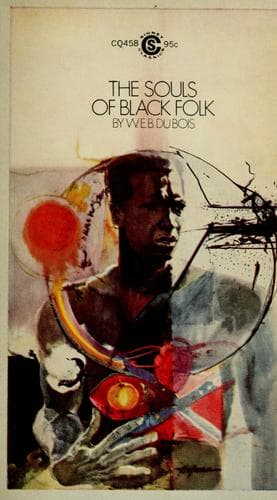
The Souls of Black FolkDu Bois, W. E. B. (William Edward Burghardt)
History
The Souls of Black Folk
Du Bois, W. E. B. (William Edward Burghardt)
African Americans
Those who have not thus witnessed the frenzy of a Negro revival in the
untouched backwoods of the South can but dimly realize the religious
feeling of the slave; as described, such scenes appear grotesque and
funny, but as seen they are awful. Three things characterized this
religion of the slave,—the Preacher, the Music, and the Frenzy. The
Preacher is the most unique personality developed by the Negro on
American soil. A leader, a politician, an orator, a “boss,” an
intriguer, an idealist,—all these he is, and ever, too, the centre of a
group of men, now twenty, now a thousand in number. The combination of
a certain adroitness with deep-seated earnestness, of tact with
consummate ability, gave him his preeminence, and helps him maintain
it. The type, of course, varies according to time and place, from the
West Indies in the sixteenth century to New England in the nineteenth,
and from the Mississippi bottoms to cities like New Orleans or New
York.
The Music of Negro religion is that plaintive rhythmic melody, with its
touching minor cadences, which, despite caricature and defilement,
still remains the most original and beautiful expression of human life
and longing yet born on American soil. Sprung from the African forests,
where its counterpart can still be heard, it was adapted, changed, and
intensified by the tragic soul-life of the slave, until, under the
stress of law and whip, it became the one true expression of a people’s
sorrow, despair, and hope.
Finally the Frenzy of “Shouting,” when the Spirit of the Lord passed
by, and, seizing the devotee, made him mad with supernatural joy, was
the last essential of Negro religion and the one more devoutly believed
in than all the rest. It varied in expression from the silent rapt
countenance or the low murmur and moan to the mad abandon of physical
fervor,—the stamping, shrieking, and shouting, the rushing to and fro
and wild waving of arms, the weeping and laughing, the vision and the
trance. All this is nothing new in the world, but old as religion, as
Delphi and Endor. And so firm a hold did it have on the Negro, that
many generations firmly believed that without this visible
manifestation of the God there could be no true communion with the
Invisible.
Public-domain text, read in full here on John Shaqi.
Reviews
Reviews
No reviews yet
Be the first to share your thoughts on this work.
Elsewhere in the archive
Join the Discussion
Join the discussion
Sign in to leave a comment or review.
Sign InorCreate an account