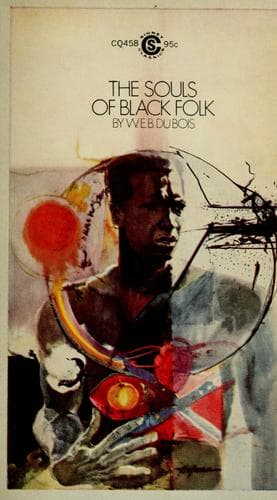
The Souls of Black FolkDu Bois, W. E. B. (William Edward Burghardt)
History
The Souls of Black Folk
Du Bois, W. E. B. (William Edward Burghardt)
African Americans
On the other hand, in the North the tendency is to emphasize the
radicalism of the Negro. Driven from his birthright in the South by a
situation at which every fibre of his more outspoken and assertive
nature revolts, he finds himself in a land where he can scarcely earn a
decent living amid the harsh competition and the color discrimination.
At the same time, through schools and periodicals, discussions and
lectures, he is intellectually quickened and awakened. The soul, long
pent up and dwarfed, suddenly expands in new-found freedom. What wonder
that every tendency is to excess,—radical complaint, radical remedies,
bitter denunciation or angry silence. Some sink, some rise. The
criminal and the sensualist leave the church for the gambling-hell and
the brothel, and fill the slums of Chicago and Baltimore; the better
classes segregate themselves from the group-life of both white and
black, and form an aristocracy, cultured but pessimistic, whose bitter
criticism stings while it points out no way of escape. They despise the
submission and subserviency of the Southern Negroes, but offer no other
means by which a poor and oppressed minority can exist side by side
with its masters. Feeling deeply and keenly the tendencies and
opportunities of the age in which they live, their souls are bitter at
the fate which drops the Veil between; and the very fact that this
bitterness is natural and justifiable only serves to intensify it and
make it more maddening.
Between the two extreme types of ethical attitude which I have thus
sought to make clear wavers the mass of the millions of Negroes, North
and South; and their religious life and activity partake of this social
conflict within their ranks. Their churches are differentiating,—now
into groups of cold, fashionable devotees, in no way distinguishable
from similar white groups save in color of skin; now into large social
and business institutions catering to the desire for information and
amusement of their members, warily avoiding unpleasant questions both
within and without the black world, and preaching in effect if not in
word: _Dum vivimus, vivamus_.
But back of this still broods silently the deep religious feeling of
the real Negro heart, the stirring, unguided might of powerful human
souls who have lost the guiding star of the past and seek in the great
night a new religious ideal. Some day the Awakening will come, when the
pent-up vigor of ten million souls shall sweep irresistibly toward the
Goal, out of the Valley of the Shadow of Death, where all that makes
life worth living—Liberty, Justice, and Right—is marked “For White
People Only.”
XI.
Of the Passing of the First-Born
O sister, sister, thy first-begotten,
The hands that cling and the feet that follow,
The voice of the child’s blood crying yet,
_Who hath remembered me? who hath forgotten?_
Thou hast forgotten, O summer swallow,
But the world shall end when I forget.
SWINBURNE.
[Illustration]
Public-domain text, read in full here on John Shaqi.
Reviews
Reviews
No reviews yet
Be the first to share your thoughts on this work.
Elsewhere in the archive
Join the Discussion
Join the discussion
Sign in to leave a comment or review.
Sign InorCreate an account