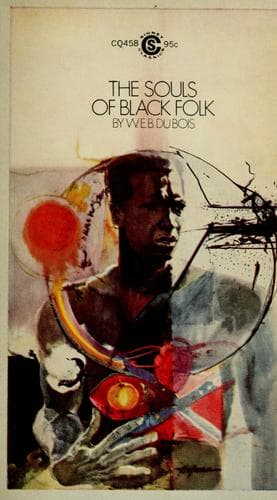
The Souls of Black FolkDu Bois, W. E. B. (William Edward Burghardt)
History
The Souls of Black Folk
Du Bois, W. E. B. (William Edward Burghardt)
African Americans
Then the movement changed, and fuller, mightier harmony swelled away.
He looked thoughtfully across the hall, and wondered why the beautiful
gray-haired woman looked so listless, and what the little man could be
whispering about. He would not like to be listless and idle, he
thought, for he felt with the music the movement of power within him.
If he but had some master-work, some life-service, hard,—aye, bitter
hard, but without the cringing and sickening servility, without the
cruel hurt that hardened his heart and soul. When at last a soft sorrow
crept across the violins, there came to him the vision of a far-off
home, the great eyes of his sister, and the dark drawn face of his
mother. And his heart sank below the waters, even as the sea-sand sinks
by the shores of Altamaha, only to be lifted aloft again with that last
ethereal wail of the swan that quivered and faded away into the sky.
It left John sitting so silent and rapt that he did not for some time
notice the usher tapping him lightly on the shoulder and saying
politely, “Will you step this way, please, sir?” A little surprised, he
arose quickly at the last tap, and, turning to leave his seat, looked
full into the face of the fair-haired young man. For the first time the
young man recognized his dark boyhood playmate, and John knew that it
was the Judge’s son. The White John started, lifted his hand, and then
froze into his chair; the black John smiled lightly, then grimly, and
followed the usher down the aisle. The manager was sorry, very, very
sorry,—but he explained that some mistake had been made in selling the
gentleman a seat already disposed of; he would refund the money, of
course,—and indeed felt the matter keenly, and so forth, and—before he
had finished John was gone, walking hurriedly across the square and
down the broad streets, and as he passed the park he buttoned his coat
and said, “John Jones, you’re a natural-born fool.” Then he went to his
lodgings and wrote a letter, and tore it up; he wrote another, and
threw it in the fire. Then he seized a scrap of paper and wrote: “Dear
Mother and Sister—I am coming—John.”
“Perhaps,” said John, as he settled himself on the train, “perhaps I am
to blame myself in struggling against my manifest destiny simply
because it looks hard and unpleasant. Here is my duty to Altamaha plain
before me; perhaps they’ll let me help settle the Negro problems
there,—perhaps they won’t. ‘I will go in to the King, which is not
according to the law; and if I perish, I perish.’” And then he mused
and dreamed, and planned a life-work; and the train flew south.
Public-domain text, read in full here on John Shaqi.
Reviews
Reviews
No reviews yet
Be the first to share your thoughts on this work.
Elsewhere in the archive
Join the Discussion
Join the discussion
Sign in to leave a comment or review.
Sign InorCreate an account