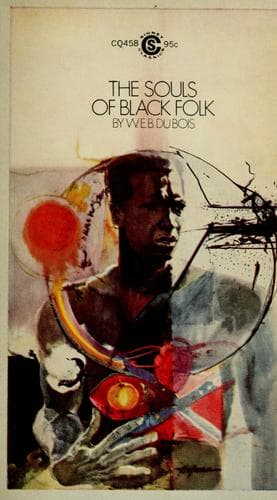
The Souls of Black FolkDu Bois, W. E. B. (William Edward Burghardt)
History
The Souls of Black Folk
Du Bois, W. E. B. (William Edward Burghardt)
African Americans
They that walked in darkness sang songs in the olden days—Sorrow
Songs—for they were weary at heart. And so before each thought that I
have written in this book I have set a phrase, a haunting echo of these
weird old songs in which the soul of the black slave spoke to men. Ever
since I was a child these songs have stirred me strangely. They came
out of the South unknown to me, one by one, and yet at once I knew them
as of me and of mine. Then in after years when I came to Nashville I
saw the great temple builded of these songs towering over the pale
city. To me Jubilee Hall seemed ever made of the songs themselves, and
its bricks were red with the blood and dust of toil. Out of them rose
for me morning, noon, and night, bursts of wonderful melody, full of
the voices of my brothers and sisters, full of the voices of the past.
Little of beauty has America given the world save the rude grandeur God
himself stamped on her bosom; the human spirit in this new world has
expressed itself in vigor and ingenuity rather than in beauty. And so
by fateful chance the Negro folk-song—the rhythmic cry of the
slave—stands to-day not simply as the sole American music, but as the
most beautiful expression of human experience born this side the seas.
It has been neglected, it has been, and is, half despised, and above
all it has been persistently mistaken and misunderstood; but
notwithstanding, it still remains as the singular spiritual heritage of
the nation and the greatest gift of the Negro people.
Away back in the thirties the melody of these slave songs stirred the
nation, but the songs were soon half forgotten. Some, like “Near the
lake where drooped the willow,” passed into current airs and their
source was forgotten; others were caricatured on the “minstrel” stage
and their memory died away. Then in war-time came the singular Port
Royal experiment after the capture of Hilton Head, and perhaps for the
first time the North met the Southern slave face to face and heart to
heart with no third witness. The Sea Islands of the Carolinas, where
they met, were filled with a black folk of primitive type, touched and
moulded less by the world about them than any others outside the Black
Belt. Their appearance was uncouth, their language funny, but their
hearts were human and their singing stirred men with a mighty power.
Thomas Wentworth Higginson hastened to tell of these songs, and Miss
McKim and others urged upon the world their rare beauty. But the world
listened only half credulously until the Fisk Jubilee Singers sang the
slave songs so deeply into the world’s heart that it can never wholly
forget them again.
Public-domain text, read in full here on John Shaqi.
Reviews
Reviews
No reviews yet
Be the first to share your thoughts on this work.
Elsewhere in the archive
Join the Discussion
Join the discussion
Sign in to leave a comment or review.
Sign InorCreate an account