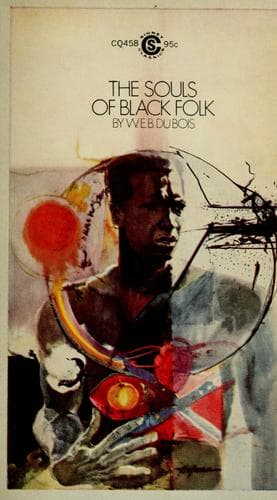
The Souls of Black FolkDu Bois, W. E. B. (William Edward Burghardt)
History
The Souls of Black Folk
Du Bois, W. E. B. (William Edward Burghardt)
African Americans
At Albany, in the heart of the Black Belt, we stop. Two hundred miles
south of Atlanta, two hundred miles west of the Atlantic, and one
hundred miles north of the Great Gulf lies Dougherty County, with ten
thousand Negroes and two thousand whites. The Flint River winds down
from Andersonville, and, turning suddenly at Albany, the county-seat,
hurries on to join the Chattahoochee and the sea. Andrew Jackson knew
the Flint well, and marched across it once to avenge the Indian
Massacre at Fort Mims. That was in 1814, not long before the battle of
New Orleans; and by the Creek treaty that followed this campaign, all
Dougherty County, and much other rich land, was ceded to Georgia.
Still, settlers fought shy of this land, for the Indians were all
about, and they were unpleasant neighbors in those days. The panic of
1837, which Jackson bequeathed to Van Buren, turned the planters from
the impoverished lands of Virginia, the Carolinas, and east Georgia,
toward the West. The Indians were removed to Indian Territory, and
settlers poured into these coveted lands to retrieve their broken
fortunes. For a radius of a hundred miles about Albany, stretched a
great fertile land, luxuriant with forests of pine, oak, ash, hickory,
and poplar; hot with the sun and damp with the rich black swamp-land;
and here the corner-stone of the Cotton Kingdom was laid.
Albany is to-day a wide-streeted, placid, Southern town, with a broad
sweep of stores and saloons, and flanking rows of homes,—whites usually
to the north, and blacks to the south. Six days in the week the town
looks decidedly too small for itself, and takes frequent and prolonged
naps. But on Saturday suddenly the whole county disgorges itself upon
the place, and a perfect flood of black peasantry pours through the
streets, fills the stores, blocks the sidewalks, chokes the
thoroughfares, and takes full possession of the town. They are black,
sturdy, uncouth country folk, good-natured and simple, talkative to a
degree, and yet far more silent and brooding than the crowds of the
Rhine-pfalz, or Naples, or Cracow. They drink considerable quantities
of whiskey, but do not get very drunk; they talk and laugh loudly at
times, but seldom quarrel or fight. They walk up and down the streets,
meet and gossip with friends, stare at the shop windows, buy coffee,
cheap candy, and clothes, and at dusk drive home—happy? well no, not
exactly happy, but much happier than as though they had not come.
Public-domain text, read in full here on John Shaqi.
Reviews
Reviews
No reviews yet
Be the first to share your thoughts on this work.
Elsewhere in the archive
Join the Discussion
Join the discussion
Sign in to leave a comment or review.
Sign InorCreate an account