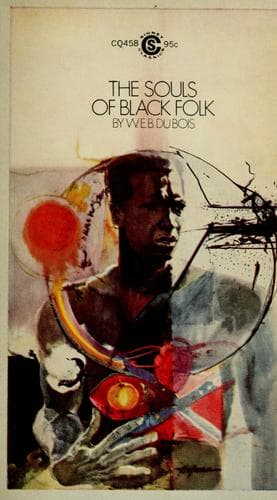
The Souls of Black FolkDu Bois, W. E. B. (William Edward Burghardt)
History
The Souls of Black Folk
Du Bois, W. E. B. (William Edward Burghardt)
African Americans
Thus Albany is a real capital,—a typical Southern county town, the
centre of the life of ten thousand souls; their point of contact with
the outer world, their centre of news and gossip, their market for
buying and selling, borrowing and lending, their fountain of justice
and law. Once upon a time we knew country life so well and city life so
little, that we illustrated city life as that of a closely crowded
country district. Now the world has well-nigh forgotten what the
country is, and we must imagine a little city of black people scattered
far and wide over three hundred lonesome square miles of land, without
train or trolley, in the midst of cotton and corn, and wide patches of
sand and gloomy soil.
It gets pretty hot in Southern Georgia in July,—a sort of dull,
determined heat that seems quite independent of the sun; so it took us
some days to muster courage enough to leave the porch and venture out
on the long country roads, that we might see this unknown world.
Finally we started. It was about ten in the morning, bright with a
faint breeze, and we jogged leisurely southward in the valley of the
Flint. We passed the scattered box-like cabins of the brickyard hands,
and the long tenement-row facetiously called “The Ark,” and were soon
in the open country, and on the confines of the great plantations of
other days. There is the “Joe Fields place”; a rough old fellow was he,
and had killed many a “nigger” in his day. Twelve miles his plantation
used to run,—a regular barony. It is nearly all gone now; only
straggling bits belong to the family, and the rest has passed to Jews
and Negroes. Even the bits which are left are heavily mortgaged, and,
like the rest of the land, tilled by tenants. Here is one of them
now,—a tall brown man, a hard worker and a hard drinker, illiterate,
but versed in farmlore, as his nodding crops declare. This
distressingly new board house is his, and he has just moved out of
yonder moss-grown cabin with its one square room.
From the curtains in Benton’s house, down the road, a dark comely face
is staring at the strangers; for passing carriages are not every-day
occurrences here. Benton is an intelligent yellow man with a good-sized
family, and manages a plantation blasted by the war and now the broken
staff of the widow. He might be well-to-do, they say; but he carouses
too much in Albany. And the half-desolate spirit of neglect born of the
very soil seems to have settled on these acres. In times past there
were cotton-gins and machinery here; but they have rotted away.
Public-domain text, read in full here on John Shaqi.
Reviews
Reviews
No reviews yet
Be the first to share your thoughts on this work.
Elsewhere in the archive
Join the Discussion
Join the discussion
Sign in to leave a comment or review.
Sign InorCreate an account