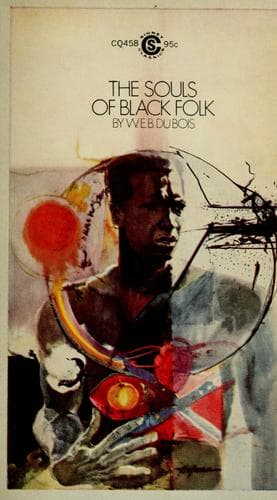
The Souls of Black FolkDu Bois, W. E. B. (William Edward Burghardt)
History
The Souls of Black Folk
Du Bois, W. E. B. (William Edward Burghardt)
African Americans
Then came the black slaves. Day after day the clank of chained feet
marching from Virginia and Carolina to Georgia was heard in these rich
swamp lands. Day after day the songs of the callous, the wail of the
motherless, and the muttered curses of the wretched echoed from the
Flint to the Chickasawhatchee, until by 1860 there had risen in West
Dougherty perhaps the richest slave kingdom the modern world ever knew.
A hundred and fifty barons commanded the labor of nearly six thousand
Negroes, held sway over farms with ninety thousand acres tilled land,
valued even in times of cheap soil at three millions of dollars. Twenty
thousand bales of ginned cotton went yearly to England, New and Old;
and men that came there bankrupt made money and grew rich. In a single
decade the cotton output increased four-fold and the value of lands was
tripled. It was the heyday of the _nouveau riche_, and a life of
careless extravagance among the masters. Four and six bobtailed
thoroughbreds rolled their coaches to town; open hospitality and gay
entertainment were the rule. Parks and groves were laid out, rich with
flower and vine, and in the midst stood the low wide-halled “big
house,” with its porch and columns and great fireplaces.
And yet with all this there was something sordid, something forced,—a
certain feverish unrest and recklessness; for was not all this show and
tinsel built upon a groan? “This land was a little Hell,” said a
ragged, brown, and grave-faced man to me. We were seated near a
roadside blacksmith shop, and behind was the bare ruin of some master’s
home. “I’ve seen niggers drop dead in the furrow, but they were kicked
aside, and the plough never stopped. Down in the guard-house, there’s
where the blood ran.”
With such foundations a kingdom must in time sway and fall. The masters
moved to Macon and Augusta, and left only the irresponsible overseers
on the land. And the result is such ruin as this, the Lloyd
“home-place”:—great waving oaks, a spread of lawn, myrtles and
chestnuts, all ragged and wild; a solitary gate-post standing where
once was a castle entrance; an old rusty anvil lying amid rotting
bellows and wood in the ruins of a blacksmith shop; a wide rambling old
mansion, brown and dingy, filled now with the grandchildren of the
slaves who once waited on its tables; while the family of the master
has dwindled to two lone women, who live in Macon and feed hungrily off
the remnants of an earldom. So we ride on, past phantom gates and
falling homes,—past the once flourishing farms of the Smiths, the
Gandys, and the Lagores,—and find all dilapidated and half ruined, even
there where a solitary white woman, a relic of other days, sits alone
in state among miles of Negroes and rides to town in her ancient coach
each day.
Public-domain text, read in full here on John Shaqi.
Reviews
Reviews
No reviews yet
Be the first to share your thoughts on this work.
Elsewhere in the archive
Join the Discussion
Join the discussion
Sign in to leave a comment or review.
Sign InorCreate an account