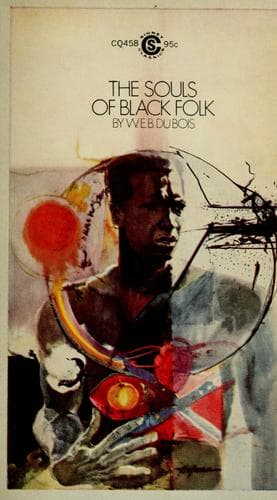
The Souls of Black FolkDu Bois, W. E. B. (William Edward Burghardt)
History
The Souls of Black Folk
Du Bois, W. E. B. (William Edward Burghardt)
African Americans
The Whistle place, which includes his bit of land, was bought soon
after the war by an English syndicate, the “Dixie Cotton and Corn
Company.” A marvellous deal of style their factor put on, with his
servants and coach-and-six; so much so that the concern soon landed in
inextricable bankruptcy. Nobody lives in the old house now, but a man
comes each winter out of the North and collects his high rents. I know
not which are the more touching,—such old empty houses, or the homes of
the masters’ sons. Sad and bitter tales lie hidden back of those white
doors,—tales of poverty, of struggle, of disappointment. A revolution
such as that of ’63 is a terrible thing; they that rose rich in the
morning often slept in paupers’ beds. Beggars and vulgar speculators
rose to rule over them, and their children went astray. See yonder
sad-colored house, with its cabins and fences and glad crops! It is not
glad within; last month the prodigal son of the struggling father wrote
home from the city for money. Money! Where was it to come from? And so
the son rose in the night and killed his baby, and killed his wife, and
shot himself dead. And the world passed on.
I remember wheeling around a bend in the road beside a graceful bit of
forest and a singing brook. A long low house faced us, with porch and
flying pillars, great oaken door, and a broad lawn shining in the
evening sun. But the window-panes were gone, the pillars were
worm-eaten, and the moss-grown roof was falling in. Half curiously I
peered through the unhinged door, and saw where, on the wall across the
hall, was written in once gay letters a faded “Welcome.”
Quite a contrast to the southwestern part of Dougherty County is the
northwest. Soberly timbered in oak and pine, it has none of that
half-tropical luxuriance of the southwest. Then, too, there are fewer
signs of a romantic past, and more of systematic modern land-grabbing
and money-getting. White people are more in evidence here, and farmer
and hired labor replace to some extent the absentee landlord and
rack-rented tenant. The crops have neither the luxuriance of the richer
land nor the signs of neglect so often seen, and there were fences and
meadows here and there. Most of this land was poor, and beneath the
notice of the slave-baron, before the war. Since then his poor
relations and foreign immigrants have seized it. The returns of the
farmer are too small to allow much for wages, and yet he will not sell
off small farms. There is the Negro Sanford; he has worked fourteen
years as overseer on the Ladson place, and “paid out enough for
fertilizers to have bought a farm,” but the owner will not sell off a
few acres.
Public-domain text, read in full here on John Shaqi.
Reviews
Reviews
No reviews yet
Be the first to share your thoughts on this work.
Elsewhere in the archive
Join the Discussion
Join the discussion
Sign in to leave a comment or review.
Sign InorCreate an account