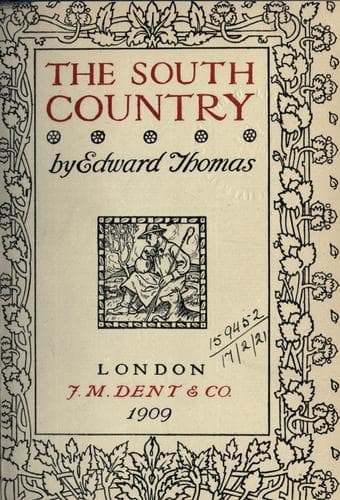
England -- Description and travel; Natural history -- England; Thomas, Edward, 1878-1917 -- Travel -- England
and seeing the sun set between the two precipices of brick wall at the
top; it was as if a gate opened there and through it all the people and
things that saddened me had disappeared and left me to myself; it was
like the pit, too, that opened before me as a little child.
“My father died of consumption. I was then just able to earn my own
living, so I was left in lodgings and my mother returned to Wales. I
worked hard at figures; at least I went early and stayed late and never
stopped to talk to the others; yet I made frequent mistakes, and the
figures swam in a mist of American rivers and English waterfalls and
gipsy camps, so that it was a wonder I could ever see my Thoreau and
Wordsworth and Borrow without these figures. Fancy men adopting as a
cry the ‘right to work’! Apparently they are too broken-spirited to
think of a right to live, and would be content only to work. It is not
wonderful that with such a cry they do very little. Men cannot fight
hard for the ‘right to work’ as I did. My office was at the bottom
of a pit. The four sides of the pit were walls with many windows,
and I could hear voices speaking in the rooms behind and the click
of typewriters, but could not see into them. Only for two or three
days in June could I see the sun out of the pit. But in the hot days
blue-bottles buzzed on my panes and I took care of them until one by
one they lay dead upon the window ledge. There were no spiders and
they seemed to have a good life. Sparrows sometimes flew up and down
the pit, and once for a week I had the company of a black-and-white
pigeon. It sat day after day in a hole in the opposite wall until it
died and fell on to the paved yard below. The clouds sailed over the
top of the pit. Sea-gulls flew over, all golden-winged, in October
afternoons. I liked the fog when all the lights were lit, and though
we did not know one another in the pit we seemed to keep one another
company. But I liked the rain best of all. It used to splash down from
all sides and make a country noise, and I looked up and saw the quaint
cowls sitting like cats on the chimney-pots, and had ridiculous fancies
that took me far away for a second or two.
“The worst time of all was two or three years after my father’s death.
I spent most of my poor earnings on clothes; I took the trouble to talk
and smoke and think as much as possible like the other nine young men
in the railway carriage that took me into the city; I learned their
horrible, cowardly scorn for those who were poor or outlandish, and for
all things that were not like those in their own houses or in those of
the richer people of their acquaintance or envy. We were slaves, and we
gilded our collars.”
Public-domain text, read in full here on John Shaqi.
Reviews
Reviews
No reviews yet
Be the first to share your thoughts on this work.
Join the Discussion
Join the discussion
Sign in to leave a comment or review.
Sign InorCreate an account