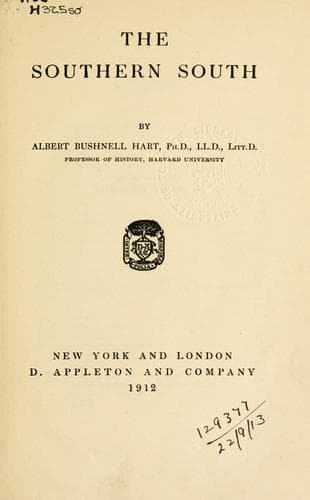
Southern States -- Social conditions; United States -- Race relations
Though often accused by his white neighbor of attempts to unite in hostile
organizations, the Negroes show little disposition to rally around and
support leaders of their own race. Booker T. Washington, the man of most
influence among them, has encountered implacable opposition, and efforts
have even been made by hostile members of his own race to break up his
meetings in Boston. Inasmuch as the Negroes are excluded from politics in
the South, it is hard for any man to get that reputation for bringing
things about which is necessary in order to attract a strong following. As
DuBois points out "If such men are to be effective they must have some
power,--they must be backed by the best public opinion of these
communities, and able to wield for their objects and aims such weapons as
the experience of the world has taught are indispensable to human
progress."
One of the strong influences is the conferences gathered in part at such
institutions as Hampton and Tuskegee, and Atlanta University, in part
called in other places. A considerable number of Negroes have the money
and the inclination to attend these meetings, where they learn to know
each other and to express their common wants.
CHAPTER XI
IS THE NEGRO RISING?
That the Negro is inferior to the Whites among whom he lives is a cause of
apprehension to the whole land; that his labor is in steadiness and
efficiency much below that of his intelligent white neighbors is a
drawback to his section. Yet neither deficiencies of character nor of
industry really settle his place in the community. A race may be as high
as the Greeks and yet go to nothingness; a race may be as industrious as
the Chinese, and have little to show for it. The essential question with
regard to the Negro is simply: Is the race in America moving downward or
upward? No matter if it be low, has it the capacity of rising?
Public-domain text, read in full here on John Shaqi.
Reviews
Reviews
No reviews yet
Be the first to share your thoughts on this work.
Elsewhere in the archive
Join the Discussion
Join the discussion
Sign in to leave a comment or review.
Sign InorCreate an account