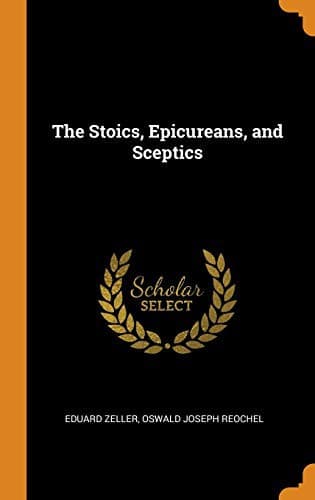
In passing from School to School the post-Aristotelian philosophy
assumed, as might be expected, various modifications of character in
course of time; nevertheless, it retained a certain mental habit and
certain common elements. Such was the neglect of intellectual
originality, which drove some thinkers to a sceptical denial of all
knowledge, and induced others to take their knowledge at second hand
from older authorities. Such was the prominence given to practical over
speculative questions. Such was the disregard for natural science, and,
in comparison with former times, the greater importance attached to
theology, apparent not only in the controversy between the Epicureans
and Stoics, but also in the apologetic writings of the Stoics and
Platonists. Such, too, was the negative morality which aimed at
independence of the outer world, at mental composure, and philosophic
contentment; the separation of morals from politics; the moral
universalism and citizenship of the world; the going within self into
the depths of the soul, the will, and the thinking powers; the
deepening of the consciousness accompanied at the same time by a
narrowing and isolation of it, and the loss of a lively interest in the
outer world, and in the simple scientific study thereof.
[C. Development of post-Aristotelian philosophy.]
[(1) Dogmatic Schools.]
[(a) Stoics and Epicureans.]
This mental habit, first of all, found simple dogmatic expression in
philosophical systems. Not only moral science, but also logic and
natural science, were treated in a way consonant with it, although they
were partially built upon older views. In dealing with the moral
problem, two Schools come to view, markedly different and decided in
their peculiarities. The Stoics regard almost exclusively the universal
element in man who seeks contentment within, the Epicureans catch at
the individual side of his being. The Stoics regard man exclusively as
a thinking being, the Epicureans as a creature of feeling. The Stoics
make happiness to consist in subordination to the law of the whole, in
the suppression of personal feelings and inclinations, in virtue; the
Epicureans in individual independence of everything external, in the
unruffled serenity of the inner life, in painlessness. The theoretical
bases of their teaching correspond with these fundamental ethical
positions.
[(b) Dogmatic scepticism.]
Public-domain text, read in full here on John Shaqi.
Reviews
Reviews
No reviews yet
Be the first to share your thoughts on this work.
Join the Discussion
Join the discussion
Sign in to leave a comment or review.
Sign InorCreate an account