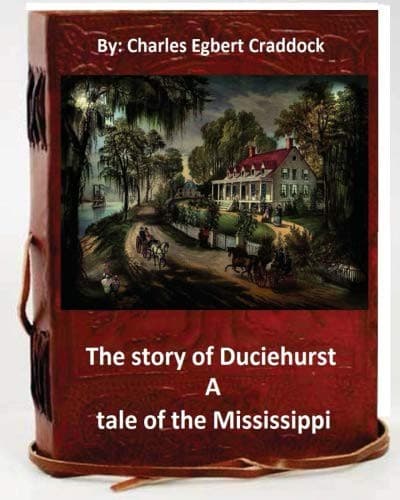
The Story of Duciehurst: A Tale of the MississippiCraddock, Charles Egbert
General
The Story of Duciehurst: A Tale of the Mississippi
Craddock, Charles Egbert
Mississippi River -- Fiction
Certainly no institution of its type ever had such cheerful inmates as
the Glenrose Sanatorium could boast so long as Colonel Kenwynton and the
blind Major sojourned within its gates, the guests of the alienist and
Captain Hugh Treherne. The patient experienced no recurrence of his
malady during the visit. Indeed, the beneficial influence, with the
incident change of thought, conversation, and occupation, was so obvious
that the physician acceded to Colonel Kenwynton’s earnest urgency to
allow the Captain to go home with him and spend a few weeks at his
plantation, in a neighboring county. They made a solemn compact for the
conservation of his safety and the promotion of his mental health.
“Captain,” said the Colonel the first evening that they spent together
over the wood fire in the old plantation house, “I don’t know what is
the particular devil that you say possesses you at times, and I don’t
want to know. He is an indignity to you and an affront to me. Never
mention the nature of the obsession to me for I won’t hear it. Never let
me have so much as a glimpse of his horn or his hoof. But if you,
unhappily, ever feel again the clutch of his claw fastening on you, just
report to me, and we’ll both strike out in a dog-trot for that insane
asylum, and let the doctor exorcise him a bit. And I swear to you before
God on our sacred bonds as comrades in the Lost Cause I will stay there
with you till you are ready to come home with me. Shake hands on it,
dear old fellow--shake hands on it.”
Perhaps because the topic was interdicted in conversation it was the
less intrusive in thought. Hugh Treherne maintained an observance of the
Colonel’s mandate as strict and as soldierly as if it had been read in
general orders at the head of the regiment. He found an interest in the
Colonel’s affairs in the ramshackle old place, which was but a meager
remnant of his former princely domain. Colonel Kenwynton had brought
down from the larger methods of the old times a constitutional disregard
of minutæ. Hence men, “indifferent honest,” otherwise would overreach
him in negotiation. Servants filched ruthlessly his minor possessions.
His pastures, fields, barns, orchards, were plundered with scarcely a
realization of the significance of robbery, the facile phrase, “The old
Cunnel won’t care,” or “The old Cunnel won’t ever know the difference,”
sufficient to numb any faint prick of conscience.
Public-domain text, read in full here on John Shaqi.
Reviews
Reviews
No reviews yet
Be the first to share your thoughts on this work.
Elsewhere in the archive
Join the Discussion
Join the discussion
Sign in to leave a comment or review.
Sign InorCreate an account