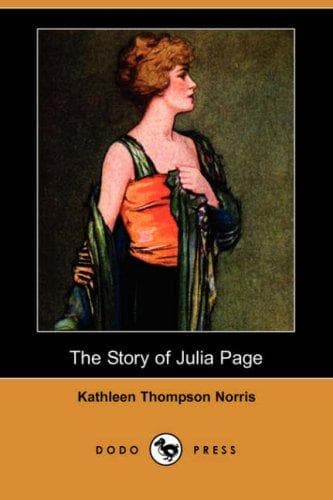
Marriage -- Fiction; Runaway husbands -- Fiction; Social settlements -- Fiction; Women -- Fiction
It was a deliberate piece of coquetry, and Julia, although neither he
nor any other man had ever done it before, was not at all surprised to
have Mark suddenly close his strong arms about her, and kiss her, with a
sort of repressed violence, on the mouth. She struggled from his hold,
as a matter of course, laughed a little laugh of triumph and excitement,
and shut herself into her own door.
Emeline was lying in bed, looking over some fashion and theatrical
magazines. Upon her daughter's entrance she gave a comfortable yawn.
"Did Mark find you, Julie? He was sitting on the stairs when I got home,
mad because you didn't go out with them."
"Yep, he found me!" Julia answered, still panting.
"It strikes me he's a little mushy on you, Julie," Emeline said, lazily,
turning a page. "And if you were a little older, or he had more of a
job, I'd give him a piece of my mind. You ain't going to marry _his_ sort,
I should hope. But, Lord, you're both only kids!"
"I guess I can mind my own business, Mama," Julia said.
"Well, I guess you can," Emeline conceded amiably. "Look, Ju, at the
size of these sleeves--ain't that something fierce? Get the light out as
soon as you can, lovey," she added, flinging away her magazine, and
rolling herself tight in the covers, with bright eyes fixed on the girl.
Ten minutes later Emeline was asleep. But Julia lay long awake,
springtime in her blood, her eyes smiling mysteriously into the dark.
CHAPTER III
By just what mental processes Emeline Page had come to feel herself a
dignified martyr in a world full of oppressed women, it would be
difficult to say: Emeline herself would have been the last person from
whom a reasonable explanation might have been expected. But it was a
fact that she never missed an opportunity to belittle the male sex; she
had never had much charm for men, she had none now, and consequently she
associated chiefly with women: with widows and grass widows of her own
type, and with the young actresses and would-be actresses of the curious
social level upon which she lived. Emeline's lack of charm was the most
valuable moral asset she had. Had she attracted men she would not long
have remained virtuous, for she was violently opposed to any restriction
upon her own desires, no matter how well established a restriction or
how generally accepted it might be. For a little while after George's
going, Emeline had indeed frequently used the term "if I marry again,"
but of late years she had rather softened to his memory, and enjoyed
abusing other men while she revelled in a fond recollection of George's
goodness.
"God knows I was only a foolish girl," Emeline would say, resting cold
wet feet against the open oven door while Julia pressed a frill. "But
your papa never was anything but a perfect ge'man, never! I'll never
forget one night when he took me to Grant's Cafe for dinner! I was all
dressed up to kill, and George looked elegant--"
A long reminiscence followed.
Public-domain text, read in full here on John Shaqi.
Reviews
Reviews
No reviews yet
Be the first to share your thoughts on this work.
Join the Discussion
Join the discussion
Sign in to leave a comment or review.
Sign InorCreate an account