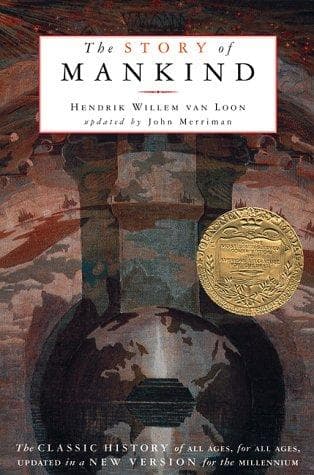
World history; World history -- Juvenile literature
Then for the first time the world possessed an easy and convenient
instrument which could be mastered in a couple of years and did not need
the eternal tuning of harps and fiddles and was much pleasanter to the
ears than the mediaeval tubas, clarinets, trombones and oboes. Just as
the phonograph has given millions of modern people their first love of
music so did the early "pianoforte" carry the knowledge of music
into much wider circles. Music became part of the education of every
well-bred man and woman. Princes and rich merchants maintained private
orchestras. The musician ceased to be a wandering "jongleur" and became
a highly valued member of the community. Music was added to the dramatic
performances of the theatre and out of this practice, grew our modern
Opera. Originally only a few very rich princes could afford the expenses
of an "opera troupe." But as the taste for this sort of entertainment
grew, many cities built their own theatres where Italian and afterwards
German operas were given to the unlimited joy of the whole community
with the exception of a few sects of very strict Christians who still
regarded music with deep suspicion as something which was too lovely to
be entirely good for the soul.
By the middle of the eighteenth century the musical life of Europe was
in full swing. Then there came forward a man who was greater than all
others, a simple organist of the Thomas Church of Leipzig, by the
name of Johann Sebastian Bach. In his compositions for every known
instrument, from comic songs and popular dances to the most stately of
sacred hymns and oratorios, he laid the foundation for all our modern
music. When he died in the year 1750 he was succeeded by Mozart, who
created musical fabrics of sheer loveliness which remind us of lace
that has been woven out of harmony and rhythm. Then came Ludwig van
Beethoven, the most tragic of men, who gave us our modern orchestra,
yet heard none of his greatest compositions because he was deaf, as the
result of a cold contracted during his years of poverty.
Beethoven lived through the period of the great French Revolution.
Full of hope for a new and glorious day, he had dedicated one of his
symphonies to Napoleon. But he lived to regret the hour. When he died in
the year 1827, Napoleon was gone and the French Revolution was gone, but
the steam engine had come and was filling the world with a sound that
had nothing in common with the dreams of the Third Symphony.
Public-domain text, read in full here on John Shaqi.
Reviews
Reviews
No reviews yet
Be the first to share your thoughts on this work.
Elsewhere in the archive
Join the Discussion
Join the discussion
Sign in to leave a comment or review.
Sign InorCreate an account