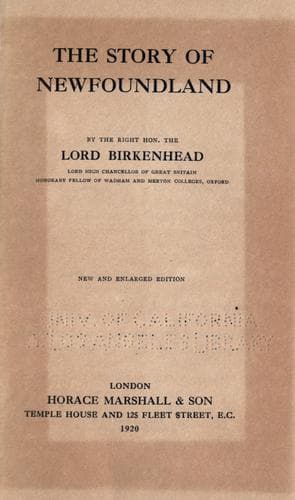
The Story of NewfoundlandBirkenhead, Frederick Edwin Smith, Earl of
History
The Story of Newfoundland
Birkenhead, Frederick Edwin Smith, Earl of
America -- Discovery and exploration -- British; Newfoundland and Labrador -- History
The development referred to sprang from the growing lobster industry
along the French shore. In 1874 and the following years lobster
factories were erected by British subjects on the French shore, in
positions where there was no French occupation and there were no
French buildings. Here there was no violation of the Treaty of Utrecht
provision, for the French were in no way restrained from "erecting
stages made of boards, and huts necessary and useful for drying of
fish," nor was there any violation of the declaration annexed to the
Treaty of Versailles, that "His Britannic Majesty will take the most
positive measures for preventing his subjects from interrupting in any
way by their competition the fishery of the French during the
temporary exercise of it which is granted them." The "fishing" which
was not to be interrupted by competition was the fishery "which is
granted to them," a limitation which throws us back at once upon the
language of the earlier treaties. Now it is indisputably clear that
the only fishing rights granted to the French were concerned with
codfish. The lobster industry was then unknown; and the language used,
and in particular "the stages and huts necessary and useful for drying
fish" spoken of, are applicable to codfish and not to lobsters, for
the canning industry was only of recent date, and lobsters, moreover,
are not dried. No fishery other than that of the codfish could then
have been contemplated. That this must have been abundantly clear is
apparent from the memoirs of M. de Torcy, one of the negotiators of
the treaty, who uses throughout the expression "morue" (codfish)--the
liberty stipulated was "pecher et secher les morues" (to fish and dry
codfish). The French, however, not content with objecting to the
presence of English factories, erected factories of their own,
comprehending them, it must be presumed, within the description "huts
necessary and useful for the drying of fish." They contended,
furthermore, that their rights were a part of the ancient French
sovereignty retained when the soil was ceded to England. Such a claim
was inadmissible on any view of the treaties. In fact, there was much
to be said for the view that no _exclusive_ right of fishery of any
sort was ever given to the French, in spite of the language of the
celebrated Declaration. As Lord Palmerston wrote, some eighty years
ago, to Count Sebastiani, in his unambiguous way: "I will observe to
your Excellency, in conclusion, that if the right conceded to the
French by the Declaration of 1783 had been intended to be exclusive
within the prescribed district, the terms used for defining such right
would assuredly have been more ample and specific than they are found
to be in that document; for in no other similar instrument which has
ever come under the knowledge of the British Government is so
important a concession as an exclusive privilege of this description
accorded in terms so loose and indefinitive. Exclusive rights are
Public-domain text, read in full here on John Shaqi.
Reviews
Reviews
No reviews yet
Be the first to share your thoughts on this work.
Elsewhere in the archive
Join the Discussion
Join the discussion
Sign in to leave a comment or review.
Sign InorCreate an account