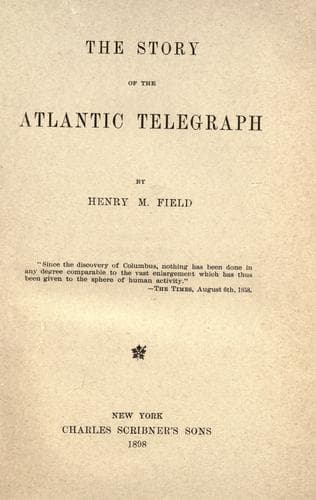
The Story of the Atlantic TelegraphField, Henry M. (Henry Martyn)
History
The Story of the Atlantic Telegraph
Field, Henry M. (Henry Martyn)
Transatlantic cables
It is the clear shining after rain. The storms that swept the sea, have
blown themselves out, and all is tranquil on the face of the deep. The
cable is lying in its ocean bed uniting the two hemispheres, nevermore
to be separated. And now comes the public recognition on both sides the
Atlantic, though in different form. The event had produced a profound
impression throughout the civilized world. Yet it was a singular
illustration of the changes in public interest, that, whereas in 1858 a
temporary success had kindled the wildest enthusiasm in the United
States, while in England it was regarded almost with indifference, now
the state of feeling in the two countries was completely reversed. In
Great Britain it was the theme of boundless congratulation, while in
America the public mind--dulled perhaps by the excitements of four years
of war--received the news with composure. The reason was, in part, that
England had had a larger share in the later than in the earlier
expeditions. Certainly none could deny the inestimable services rendered
by her men of science, her seamen, her engineers, and her great
capitalists; and it was most fit that the country which they had honored
should do them honor in its turn. Scarcely had the Great Eastern
recrossed the sea before those to whom the empire owed so much, were
duly recognized in the following letter from the Earl of Derby, then
Prime Minister, addressed to Sir Stafford Northcote, who was to preside
at a dinner given in Liverpool, to celebrate the great achievement:
"Balmoral,
Saturday, Sept. 29, 1866.
Public-domain text, read in full here on John Shaqi.
Reviews
Reviews
No reviews yet
Be the first to share your thoughts on this work.
Elsewhere in the archive
Join the Discussion
Join the discussion
Sign in to leave a comment or review.
Sign InorCreate an account