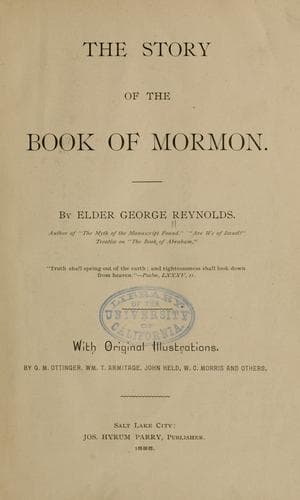
Book of Mormon; Latter Day Saint churches -- Doctrines; Latter Day Saints
The renegade Amalekites, Amulonites and others were not willing to
be ruled by a Christian monarch. They had rejected Christianity
altogether, and would not have it as the ruling power, either in Nephi
or Zarahemla. With the old sophistries and falsehoods they raised a
mutiny in the hearts of their associate Lamanites and urged them on to
rebellion against the rightful king and his believing subjects. But
the converted Lamanites made no preparations to resist them; they felt
that in times past with unholy hands they had spilt blood as water on
the land; blood that they could never atone for, but they would do it
no more. Passive non-resistance should for the future be their policy,
but the blood of a fellow-being they would never again shed, no matter
how great the peril, how intense the aggravation. As a witness of
the completeness of this resolve, they took their weapons of war and
buried them deep in the earth with an oath and covenant that they would
never dig them up again. When the maddened hosts of their embittered
brethren rushed upon them, they came forth unarmed, bowed down before
their assailants, and submitted to their fate. With them to live was
Christ, to die was salvation. The vengeful Nephite apostates led the
inglorious charge and shed most of the blood that flowed that day,
when one thousand and five unresisting martyrs glorified the Lamanite
race by the tribute of their lives to God and the truth. A thousand
ransomed souls, washed white in the blood of the Lamb, that day entered
the gates of heaven to stand amongst the saviors on Mount Zion in the
great day of the redeemed. Nor was there joy alone in that bright world
beyond, but on earth the church was gladdened by fresh accessions
to the cause. When many of the actual Lamanites witnessed the great
change that had taken place in their brethren, that they would quietly,
peacefully joyously lay down their lives, their consciences smote them;
they stayed their hands, and rose in tumult against their Amalekite
leaders, and would no longer be the murderers of their kin. The blood
of the martyrs was indeed the seed of the church, for there were more
added to the fold of Christ on that memorable day than those who passed
away to the presence of their God.
Public-domain text, read in full here on John Shaqi.
Reviews
Reviews
No reviews yet
Be the first to share your thoughts on this work.
Elsewhere in the archive
Join the Discussion
Join the discussion
Sign in to leave a comment or review.
Sign InorCreate an account