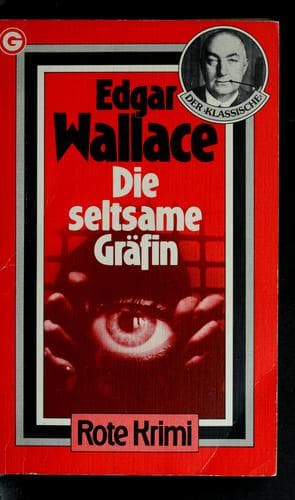
Countesses -- Fiction; Crime -- Fiction; Detective and mystery stories; Household employees -- Fiction; Young women -- Fiction
“He may be all these things and still be objectionable to me,” said
Lois shortly, and to her surprise the ungainly Lizzy put her arm
around her with an affectionate hug and laughed.
“I won’t quarrel with you the last few nights you are here. And
another thing, Lois; I’m not going to take another mate. Your room
will be waiting for you when you get tired of the aristocracy.”
One big room in the suite had been divided by a wooden partition.
There was a doorless opening that communicated between the two
cubicles, over which a curtain was hung. And after Lois had made a
parcel of the confectionery and had addressed it to her “admirer,” she
carried the package into her bedroom and put it on her dressing-table.
She must not forget to return that gift, even though she could ill
afford the postage.
They chatted across the partition (which did not reach to the ceiling)
for some time, and presently Lois slipped into her bed feeling
unutterably tired.
“Good-night,” she called.
“Hark at old Mac!”
From below stole the sad wail of old Mackenzie’s fiddle. Softly it
rose and fell, and to one of the audience at least the sound was
infinitely sweet and soothing.
“He used to be an orchestra leader--what’s the word? Conductor,” said
Lizzy. “I wish he’d keep his moonlight sonatas until I was out of the
house.”
“I like it,” said Lois.
In truth the sad melody attuned to her own troubled heart.
“It gives me the hump,” grunted Lizzy, as she jerked off her stockings
and examined her toes critically. “After you’ve gone I’m going to ask
him to give up his midnight folly.”
“He has very little amusement,” protested Lois.
“Why doesn’t he go out and get it? The old niggard never leaves the
house. He’s got plenty of money. He owns this property.”
Lois was listening. The old man was playing the Intermezzo from
_Cavalleria Rusticana_, and, hackneyed as the melody was, it sounded
to the girl as though it expressed all the sorrows, all the fears, all
the inarticulate protests of her own soul.
“Music’s all right in its place,” said Lizzy, “if it’s the right kind.
What’s the matter with ‘Maggie! Yes, Ma?’ I bought a copy of it cheap
a week ago and gave it to him and he’s not played it once!”
Presently there was silence on the other side of the partition. The
music had ceased. Lois, turning over, fell into a troubled sleep. She
dreamt she was in Telsbury Prison; it was she, among the colourless
women, who was walking that dreary circle. Somebody stood watching her
where she had stood by the doctor’s side; a great, fleshy-nosed woman
whose hard black eyes smiled sneeringly as she passed. In the centre
of the circle was the little old man, Mackenzie, his fiddle cuddled
under his chin, and he was playing a vulgar tune she had heard Lizzy
whistle.
Suddenly she woke with a start.
Public-domain text, read in full here on John Shaqi.
Reviews
Reviews
No reviews yet
Be the first to share your thoughts on this work.
Join the Discussion
Join the discussion
Sign in to leave a comment or review.
Sign InorCreate an account