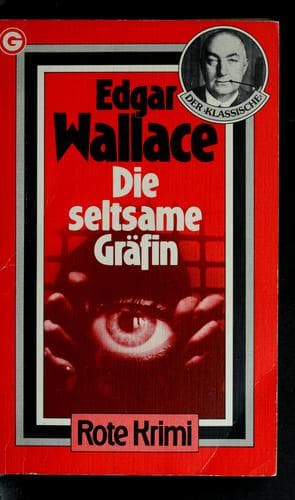
Countesses -- Fiction; Crime -- Fiction; Detective and mystery stories; Household employees -- Fiction; Young women -- Fiction
“I don’t know how that got there,” said the chattering girl. “I
cleared these drawers out myself yesterday. Her ladyship must have
brought it up and left it.”
Lois saw, though it was only a bust photograph, that the young man
wore the uniform of a Highland regiment, and she tried to recall the
badge. As a child she had been interested in regimental insignia.
“He’s good-looking, isn’t he, miss?”
“Very good-looking,” said the girl. “I wonder who he is?”
“We’ve got lots of photographs in the house and nobody knows who they
are. Her ladyship collects them,” said the girl.
“I will take it down to Lady Moron,” said Lois.
She found the countess sitting with her head in her hands before a
half-completed puzzle picture.
“Where was that? In your room?”
Lady Moron took the photograph from her hand, looked at it
disparagingly and dropped it into a table drawer.
“He was a boy I knew some many years ago,” she said, and did not
trouble to discuss how the photograph had appeared in Lois’ room.
Lois went back to her own room. It was a sunny afternoon and rather
warm. The long windows were open and one of these led on to a small
stone balcony, one of the many which ornamented the front of the
house. Across the window opening, however, was a light wooden gate
which barred access to the inviting place.
“We’re not allowed to go out on the balconies in the daytime,” said
the girl. “Her ladyship is very particular about that.”
“Does that apply to me?”
“Oh yes, miss,” said the girl. “Her ladyship doesn’t go out on to her
own balcony, except in the evenings. Nobody is allowed out by day.”
Lois was wondering what induced the eccentric countess to prohibit a
very pleasant lounging place during the day.
The afternoon post brought a number of letters, which, contrary to
Lady Moron’s express principles, had to be answered that afternoon,
and she was busy until an hour before dinner. And then the stately
lady made a suggestion for which the girl was very grateful.
“If you have any girl friend you would like to ask to tea you may--any
afternoon I am out. To-morrow will be a free evening for you. I shall
be going out to dinner.”
That night, before she retired to her comfortable bed, she wrote a
long letter to Lizzy Smith and posted it herself, and Lizzy’s reply
was characteristically prompt. Lois was eating a solitary breakfast
the next morning when a footman came in to say that she was wanted on
the telephone. It was Lizzy.
“That you, kid? I’ll be coming along to-night. Are you sending the
car, or am I taking the old No. 14? Don’t dress for me; I’m a plain
woman without any side.”
“Don’t be silly, Lizzy. I shall be all alone and expecting you.”
“What sort of a crib is it?” asked Lizzy.
“Very nice, very nice, indeed,” said Lois, but without any enthusiasm.
“Only there isn’t enough work to do.”
Public-domain text, read in full here on John Shaqi.
Reviews
Reviews
No reviews yet
Be the first to share your thoughts on this work.
Join the Discussion
Join the discussion
Sign in to leave a comment or review.
Sign InorCreate an account