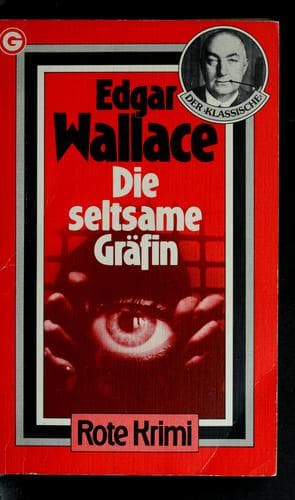
Countesses -- Fiction; Crime -- Fiction; Detective and mystery stories; Household employees -- Fiction; Young women -- Fiction
“The case is familiar to me,” said the Under-Secretary. “As a matter
of fact, I was a junior engaged in the courts when she was tried,
though not in the case. I don’t know what I can do for you. Her
sentence has nearly expired, and if I were you I should wait until she
comes out before you take any further steps. There are certain other
people interested in the case, as you probably know, and that is the
advice I have given to them.”
“But my mother was innocent,” said Lois, and he replied with an almost
imperceptible shrug of his shoulders.
“Innocence has this much in common with guilt,” he said, “that after
twenty years it is very difficult to prove or disprove. I followed the
case very closely and it seemed to me that there were two essential
pieces of evidence, one of which might have proved her guilt beyond
doubt, and one her innocence. And these were not produced at the
trial.”
“What were they?” asked Lois quickly.
“The first was the key to the box in which the jewellery and the
cyanide were discovered. If that had been found in your mother’s
possession any doubt in my mind would have been removed. That was the
judge’s view also. The other is the letter the murdered woman--or
rather,” he said hastily, “the woman who was found dead--would have
written had it been a case of suicide. You know, of course, there was
a pen and ink on the table and a pad of paper, but no letter was
found. It was a new pad, purchased by the dead lady that morning, and
one sheet had been torn away. The view of the defence was that,
preparatory to committing suicide, she had written a letter, as people
do in such circumstances. However, it was not found, although a very
careful search was made.”
And then, abruptly, he began to question her about herself, her life.
When she had told him the means by which she had identified herself
with Lois Margeritta, Mrs. Pinder’s daughter, he agreed.
“I should think you were right there,” he said.
“Even Mr. Dorn thinks I am right,” she said with a half-smile.
“Dorn?” he said sharply. “You mean the Indian man, the police officer?
Do you know him?”
“Not very well,” she said.
Could he be amongst the “other people interested in the case”? She
dismissed the possibility as absurd.
He looked at her keenly.
“In what circumstances did you meet Dorn?” he asked, and Lois was very
frank.
“Humph!” said the Under-Secretary. “Dorn isn’t that kind of man. I
mean, he wouldn’t go chasing round after a girl if there wasn’t
something else to it. He is a man of the highest integrity and
honour,” he said emphatically; and for some extraordinary reason she
was pleased to hear this tribute to the man who had so often annoyed
her.
There was nothing more to be done, and when he rose to signify the end
of the interview and shook her hand, he put into words her own
thought.
Public-domain text, read in full here on John Shaqi.
Reviews
Reviews
No reviews yet
Be the first to share your thoughts on this work.
Join the Discussion
Join the discussion
Sign in to leave a comment or review.
Sign InorCreate an account