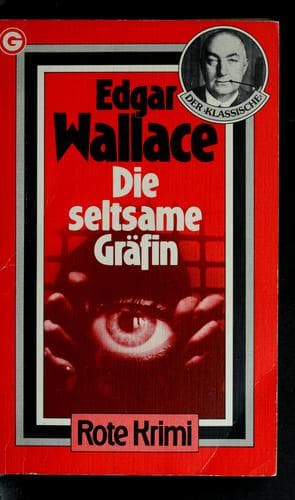
Countesses -- Fiction; Crime -- Fiction; Detective and mystery stories; Household employees -- Fiction; Young women -- Fiction
Lois laughed softly as she wrapped a gaily coloured scarf about her
throat and pulled on her gloves. Suddenly her smile vanished.
“I hate Telsbury; I hate all prisons. They give me the creeps. I am
glad I’m leaving Mr. Shaddles.”
“Don’t call him ‘Mister,’” said the other. “It is paying him a
compliment.”
The car stood at the door, as Mr. Shaddles had suggested, an ancient
and ugly machine. The day was fair and warm, and once clear of the
London traffic the sun shone brightly and she shook off the depression
which had lain upon her like a cloud all that morning. As she sent the
car spinning out of Bedford Row she glanced round instinctively for
some sign of the man to whom Lizzy had made so unflattering a
reference, and whose constant and unswerving devotion was one of the
principal embarrassments of her life. But he was nowhere in sight, and
he passed out of her mind, as, clear of London, she turned from the
main road and slowed her car along one of the twisting lanes that ran
parallel with the post route and gave one who loved the country and
the green hedgerows a more entranced vision than the high road would
have given her.
Seven miles short of Telsbury she brought the car back to the main
thoroughfare, and spun, at a speed which she uneasily recognised as
excessive, on to the tarred highway. Even as she came clear of the
high hedges she heard the warning croak of a motor-horn, and jammed on
her brakes. The little machine skidded out into the road. Too late,
she released the brakes and thrust frantically at the accelerator. She
saw the bonnet of a long, black car coming straight towards her, felt
rather than heard the exclamation of its driver.
“_Crash!_”
In that second she recognised the driver.
“Say it!”
The girl, gripping the steering wheel of her ancient Ford, stared
defiantly across a broken windscreen, but Michael Dorn did not accept
the challenge. Instead, he put his gear into reverse, preparatory to
withdrawing his running-board from the affectionate embrace of the
other guard. He did this with a manner of gentle forbearance which was
almost offensive.
“Say it!” she said. “Say something violent or vulgar! It is far better
to have things out than to let bad words go jumping around inside!”
Grey eyes need black lashes to be seen at best advantage, he thought;
and she had one of those thinnish noses that he admired in women. He
rather liked her chin, and, since it was raised aggressively, he had a
fair view of a perfect throat. It struck him as being extremely
perfect in spite of the red and yellow and green silk scarf that was
lightly knotted about. She was neatly if poorly dressed.
“Nothing jumps around inside me except my heart,” he said, “and, at
the moment, that is slipping back from my mouth. I don’t like your
necktie.”
She looked down at the offending garment and frowned.
Public-domain text, read in full here on John Shaqi.
Reviews
Reviews
No reviews yet
Be the first to share your thoughts on this work.
Join the Discussion
Join the discussion
Sign in to leave a comment or review.
Sign InorCreate an account