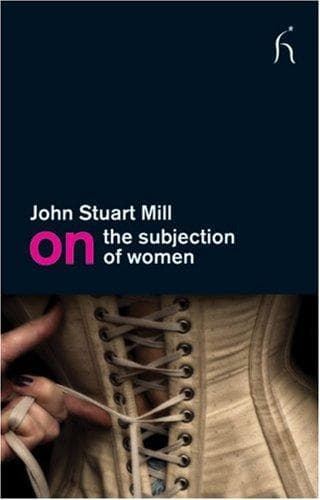
Women -- Social and moral questions; Women's rights
strength the private possessions of each, including his slaves. In
early times, the great majority of the male sex were slaves, as well
as the whole of the female. And many ages elapsed, some of them ages
of high cultivation, before any thinker was bold enough to question
the rightfulness, and the absolute social necessity, either of the
one slavery or of the other. By degrees such thinkers did arise: and
(the general progress of society assisting) the slavery of the male
sex has, in all the countries of Christian Europe at least (though,
in one of them, only within the last few years) been at length
abolished, and that of the female sex has been gradually changed into
a milder form of dependence. But this dependence, as it exists at
present, is not an original institution, taking a fresh start from
considerations of justice and social expediency--it is the primitive
state of slavery lasting on, through successive mitigations and
modifications occasioned by the same causes which have softened the
general manners, and brought all human relations more under the
control of justice and the influence of humanity. It has not lost the
taint of its brutal origin. No presumption in its favour, therefore,
can be drawn from the fact of its existence. The only such
presumption which it could be supposed to have, must be grounded on
its having lasted till now, when so many other things which came down
from the same odious source have been done away with. And this,
indeed, is what makes it strange to ordinary ears, to hear it
asserted that the inequality of rights between men and women has no
other source than the law of the strongest.
Public-domain text, read in full here on John Shaqi.
Reviews
Reviews
No reviews yet
Be the first to share your thoughts on this work.
Join the Discussion
Join the discussion
Sign in to leave a comment or review.
Sign InorCreate an account