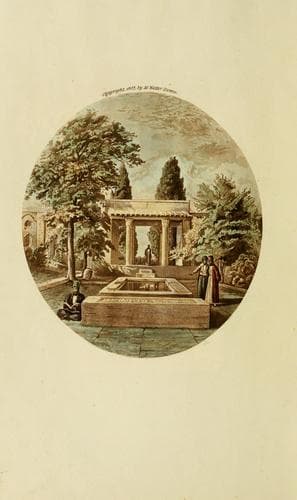
The Sufistic Quatrains of Omar KhayyamOmar Khayyam
ReligionSufism
The Sufistic Quatrains of Omar Khayyam
Omar Khayyam
FitzGerald, Edward, 1809-1883; Sufi poetry
One of the chief «roots» of their discussions was how to reconcile the
Divine justice and benevolence with the Divine prescience,--the
predestination of some vessels to honour, and others to dishonour,--the
pre-ordainment of all things by a kind of mechanical necessity (_Jabr_),
leaving no possibility of the occurrence of any events except those
which actually do occur. The consideration of one corollary of a similar
doctrine moved the pious and gentle Cowper to use language of indignant
dissent; and there is high theological authority for the view that it is
calculated «to thrust some into desperation,» but to stimulate the piety
of others. Omar is constantly dwelling on this doctrine, and he seems to
be affected by it in the double way here mentioned.
Other influences which acted on Omar must not be left out of account.
Born as he was in Khorassan, «the focus of Persian culture,» he was no
doubt familiar with speculations of the Moslem philosophers, Alkindi,
Alfarabi, and Avicenna,[102] the last of whom he may possibly have seen.
And though, think he was not himself a Sufi, in the sense of being
affiliated to any Sufi order, he can hardly have been unaffected by the
mysticism of which his predecessor in _Ruba'i_ writing, Abu Sa'id bin
Abul Khair, his patron Nizam ul Mulk, and his distinguished countryman
Imam Ghazali were all strong adherents. His philosophical studies would
naturally stimulate his sceptical and irreligious dispositions, while
his Mystic leanings would operate mainly in the contrary direction.
If this explanation of the inconsistencies in his poetry be correct, it
is obvious that the parallel often sought to be traced between him and
Lucretius has no existence. Whatever he was, he was not an Atheist. To
him, as to other Muhammadans of his time, to deny the existence of the
Deity would seem to be tantamount to denying the existence of the world
and of himself. And the conception of «laws of nature» was also one
quite foreign to his habits of thought. As Deutsch says, «To a Shemite,
Nature is simply what has been begotten, and is ruled absolutely by One
Absolute Power.»
Hammer compares him to Voltaire, but in reality he is a Voltaire and
something more. He has much of Voltaire's flippancy and irreverence. His
treatment of the doctrine of the Resurrection of the Body, for instance,
which Muhammad took from Christianity, and travestied by the
embellishments he added to it, is altogether in Voltaire's manner. And
his insistence on the all importance of kindness and charity recalls the
better side of Voltaire's character, viz., his kindness to Calas, and
the other victims of ecclesiastical persecution. But Omar also
possessed, what Voltaire did not, strong religious emotions, which at
times overrode his rationalism, and found expression in those devotional
and Mystical quatrains, which offer such a strong contrast to the rest
of his poetry.
E.H. WHINFIELD
NOTE
Public-domain text, read in full here on John Shaqi.
Reviews
Reviews
No reviews yet
Be the first to share your thoughts on this work.
Elsewhere in the archive
Join the Discussion
Join the discussion
Sign in to leave a comment or review.
Sign InorCreate an account