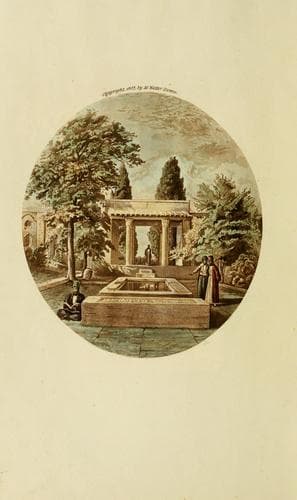
The Sufistic Quatrains of Omar KhayyamOmar Khayyam
ReligionSufism
The Sufistic Quatrains of Omar Khayyam
Omar Khayyam
FitzGerald, Edward, 1809-1883; Sufi poetry
The text has been framed from a comparison of the following
authorities:--
I. The Bodleian manuscript, No. 140 of the Ouseley Collection,
containing 158 quatrains.
II. The Calcutta Asiatic Society's manuscript, No. 1548, containing
516 quatrains.
III. The India Office manuscript, No. 2420, ff. 212 to 267, containing
512 quatrains.
IV. The Calcutta edition of 1252 A.H., containing 438 quatrains,
with an appendix of 54 more, which the editor says he found in a
Bayaz, or common-place book, after the others had been printed.
V. The Paris edition of M. Nicolas, containing 464 quatrains.
VI. The Lucknow lithographed edition, containing 763 quatrains.
VII. A fragment of an edition begun by the late Mr. Blochmann,
containing only 62 quatrains.
QUATRAINS OF OMAR KHAYYAM
1.
At dawn a cry through all the tavern shrilled,
«Arise my brethren of the revellers' guild,
That I may fill our measure, full of wine
Or e'er the measure of our days be filled.»
1. Bl. C. L. N. A. I. J. Bl. considers this quatrain Mystical.
2.
Who was it brought thee here at nightfall, who?
Forth from the harem in this manner, who?
To him who in thy absence burns as fire,
And trembles like hot air, who was it, who?
2. Bl. C. L. N. A. I. J. Bl. says the omission of the copulative _wa_ in
line 4 of the original is characteristic of Khayyam. In line 4 I follow
Blochmann's rendering. It may mean, «when the wind blows.»
3.
'Tis but a day we sojourn here below,
And all the gain we get is grief and woe,
And then, leaving life's riddles all unsolved,
And burdened with regrets, we have to go.
3. N.
4.
Khaja! grant one request, and only one,
Wish me God-speed, and get your preaching done;
I walk aright, 'tis you who see awry;
Go! heal your purblind eyes, leave me alone.
4. Bl. C. L. N. A. I. J.
5.
Arise! and come, and of thy courtesy
Resolve my weary heart's perplexity,
And fill my goblet, so that I may drink,
Or e'er they make their goblets out of me.
5. Bl. C. L. N A. I. J. The heart is supposed to be the seat of reason.
«Or ever» and «or e'er» are both found in Elizabethan English. Abbot,
Shakespearian Grammar, p. 89.
6.
When I am dead, with wine my body lave,
For obit chant a bacchanalian stave,
And, if you need me at the day of doom,
Beneath the tavern threshold seek my grave.
6. Bl. C. L. N. A. I. J.
7.
Since no one can assure thee of the morrow,
Rejoice thy heart to-day, and banish sorrow
With moonbright wine, fair moon, for heaven's moon.
Will look for us in vain on many a morrow.
7. Bl. C. L. N. A. B. I. J. Line 2 is in metre 14.
8.
Let lovers all distraught and frenzied be,
And flown with wine, and reprobates, like me;
When sober, I find everything amiss,
But in my cups cry, «Let what will be, be.»
8. Bl. L. N. Line 3 is in metre 13.
9.
Public-domain text, read in full here on John Shaqi.
Reviews
Reviews
No reviews yet
Be the first to share your thoughts on this work.
Elsewhere in the archive
Join the Discussion
Join the discussion
Sign in to leave a comment or review.
Sign InorCreate an account