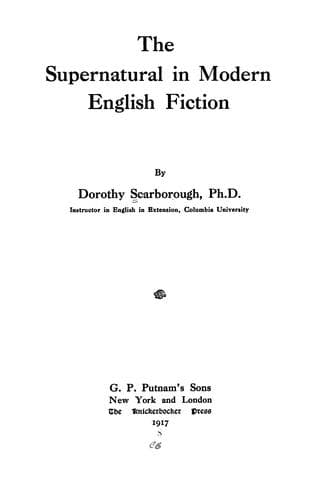
The Supernatural in Modern English FictionScarborough, Dorothy
History
The Supernatural in Modern English Fiction
Scarborough, Dorothy
English fiction -- History and criticism; Supernatural in literature
We have noticed in preceding chapters two aspects of modern
supernaturalism as distinguished from the Gothic,--the giving of
cumulative and more terrible power to ghostly beings, and on the
other hand the leveling influence that makes them more human. The
access of horror and unearthly force as shown in the characters
described by certain writers is significant. In the work of Bierce,
Machen, Blackwood, Stoker, and others supernaturalism is raised to
the nth power and every possible thrill is employed. The carrion
ghosts of Bierce, animated by malignant foreign spirits, surpass the
charnel shudders produced by the Gothic. Algernon Blackwood's Psychic
Invasions, where localities rather than mere apartments or houses alone
are haunted, diabolized by undying evil influences with compound
power, his Elementals that control the forces of wind and wave and fire
to work their demon will, are unlike anything that the early terror
novel conceived of. Horace Walpole and Mrs. Radcliffe knew no thrills
like those of Bram Stoker's Count Dracula who is an immemorial evil,
a vampire and werewolf as well as man, with power to change himself
into a vampire bat or animal of prey at will. _The Unburied_, by
Josephine Daskam Bacon, is more horrific than any mere revenge ghost,
however much it shrieked "Vindicta!" The diabolism in Arthur Machen's
work reeks obscurely of a Pit more horrible than epic or drama has
portrayed. In general, many of the later ghostly characters are more
complex, more intense in evil than the Gothic.
Public-domain text, read in full here on John Shaqi.
Reviews
Reviews
No reviews yet
Be the first to share your thoughts on this work.
Elsewhere in the archive
Join the Discussion
Join the discussion
Sign in to leave a comment or review.
Sign InorCreate an account