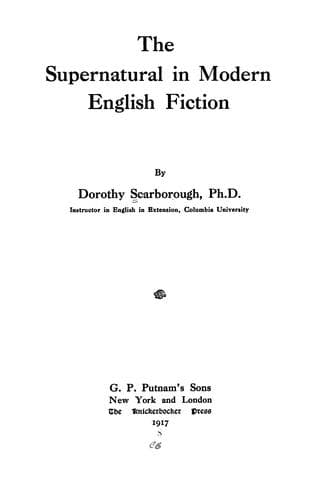
The Supernatural in Modern English Fiction — John Shaqi
The Supernatural in Modern English FictionScarborough, Dorothy
History
The Supernatural in Modern English Fiction
Scarborough, Dorothy
English fiction -- History and criticism; Supernatural in literature
The scenery in general in the Gothic novel is always subjectively
represented. Nature in itself and of itself is not the important
thing. What the writer seeks to do is by descriptions of the outer
world to emphasize the mental states of man, to reflect the moods of
the characters, and to show a fitting background for their crimes and
unearthly experiences. There is little of the light of day, of the
cheerfulness of ordinary nature, but only the scenes and phenomena that
are in harmony with the glooms of crimes and sufferings.
Like the scenery, the weather in the Gothic novel is always
subjectively treated. There is ever an artistic harmony between
man's moods and the atmospheric conditions. The play of lightning,
supernatural thunders, roaring tempests announce the approach and
operations of the devil, and ghosts walk to the accompaniment of
presaging tempests. In _The Albigenses_ the winds are diabolically
possessed and laugh fiendishly instead of moaning as they do as
seneschals in most romances of terror. The storms usually take place
at midnight, and there is rarely a peaceful night in Gothic fiction.
The stroke of twelve generally witnesses some uproar of nature as
some appearance of restless spirit. Whenever the heroines in Mrs.
Radcliffe's tales start on their midnight ramble through subterranean
passages and halls of horror, the barometer becomes agitated. And
another[6] says: "The storm, that at that moment was tremendous, could
not equal that tempest which passed in the thoughts of the unhappy
captive."
[6] St. Oswyth.
In _Zofloya_ Victoria's meetings in the forest with the Moor, who
is really the devil in disguise, are accompanied by supernatural
manifestations of nature. The weather is ordered to suit the dark,
unholy plots they make, and they plan murders against a background
of black clouds, hellish thunder, and lurid lightning. When at last
the Moor announces himself as the devil and hurls Victoria from the
mountain top, a sympathetic storm arises and a flood sweeps her body
into the river. This scene is accusingly like the one in the last
chapter of Lewis's _Monk_, where the devil throws Ambrosio from the
cliff to the river's brink.
Instantly a violent storm arose; the winds in fury rent up rocks
and forests; the sky was now black with clouds, now sheeted with
fire; the rain fell in torrents; it swelled the stream, the waves
over-flowed their banks; they reached the spot where Ambrosio lay,
and, when they abated, carried with them into the river the corse
of the despairing monk.
Public-domain text, read in full here on John Shaqi.
Reviews
Reviews
No reviews yet
Be the first to share your thoughts on this work.
Join the Discussion
Join the discussion
Sign in to leave a comment or review.
Sign InorCreate an account