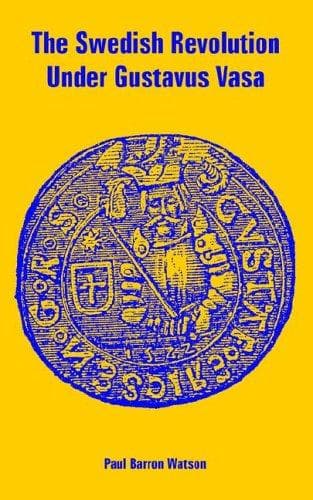
The Swedish Revolution Under Gustavus VasaWatson, Paul Barron
History
The Swedish Revolution Under Gustavus Vasa
Watson, Paul Barron
Gustav I Vasa, King of Sweden, 1496-1560; Sweden -- History -- Gustav I Vasa, 1523-1560
They stood firm in their determination; and when the diet
assembled on the 24th of June, no delegates from Dalarne appeared.[154]
The Diet of Vesterås is the bulwark of the Swedish Reformation. It is
the first embodiment in the Swedish law of the reforms of Martin Luther.
Gustavus had been making ready for this diet ever since the day of his
election, and at last the opportunity was ripe. One by one the prelates
that were hostile to his views had been removed; and Brask, the only man
of strength that still held out against him, was tottering to the grave.
His enemies abroad had been by this time silenced, and except in the
little province of Dalarne, Sweden was at peace. It was this revolt
among the Dalesmen that served as a pretext for the diet. Gustavus was
too shrewd a politician to make an open avowal of his aim. He announced
that the purpose of the diet was to quell the constant riots in the
realm, and hinted with mock innocence that he wished also to end the
dissension that had arisen in matters of the Church. Among the persons
who answered to the summons we find the names of four bishops, including
Brask, together with representatives from Upsala and all the other
Chapters excepting Åbo. Beside these, there were present one hundred and
forty-four of the nobility (of whom sixteen were Cabinet members),
thirty-two burghers, one hundred and five peasants, and fourteen
delegates from the mining districts. The king's design had been made
manifest before the diet met; for on the previous Sunday, at a banquet
given by him to the delegates already arrived in Vesterås, he had taken
especial pains to show the bishops that their temporal supremacy was at
an end. Despising every venerated custom, he had ranged about himself
the higher members of the nobility, and had consigned the bishops to an
inferior position. The affront thus put upon them galled them to the
quick, and on the following day they held a secret meeting to discuss
their wrongs. All of the bishops present excepting Brask discerned the
hopelessness of their cause, and advocated a humble submission to the
monarch's will. But Brask was boiling over with indignation. He sprang
to his feet and shouted that they must be mad. If the king wanted to
deprive them of their rights by force, he might do so. But they ought
never to consent to such a course, lest they might thereby offend the
Holy See. In times gone by, princes had frequently attempted the same
thing that Gustavus was attempting now, but the thunders of the Vatican
had always overwhelmed them. If the bishops now should fall away from
their allegiance to the pope, their only refuge would be gone. They
would become mere puppets of the king, afraid to speak a word in favor
of their old prerogatives. These sentiments of Brask's were listened to
with favor. The warmth with which he spoke produced its natural effect,
and before the prelates parted they drew up a set of "protests," as they
Public-domain text, read in full here on John Shaqi.
Reviews
Reviews
No reviews yet
Be the first to share your thoughts on this work.
Elsewhere in the archive
Join the Discussion
Join the discussion
Sign in to leave a comment or review.
Sign InorCreate an account